- Born
- 1852; Lavaca County, Texas
- Interviewed in
- Texas
- Age when photographed
- 85
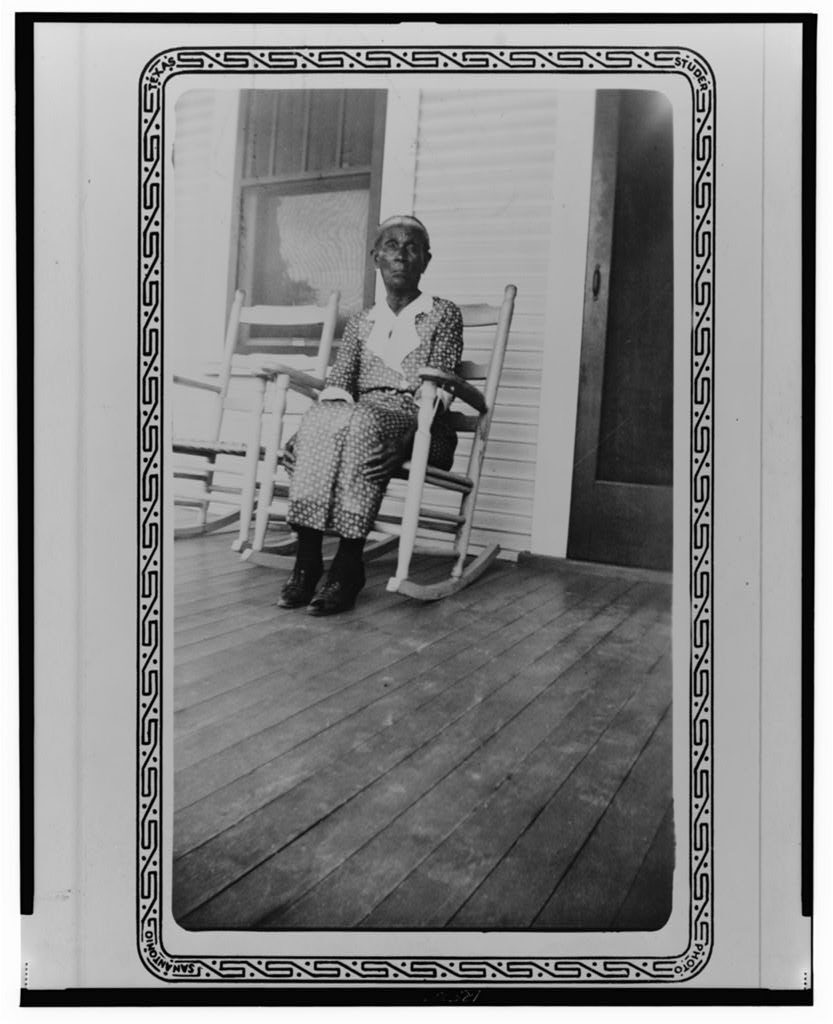
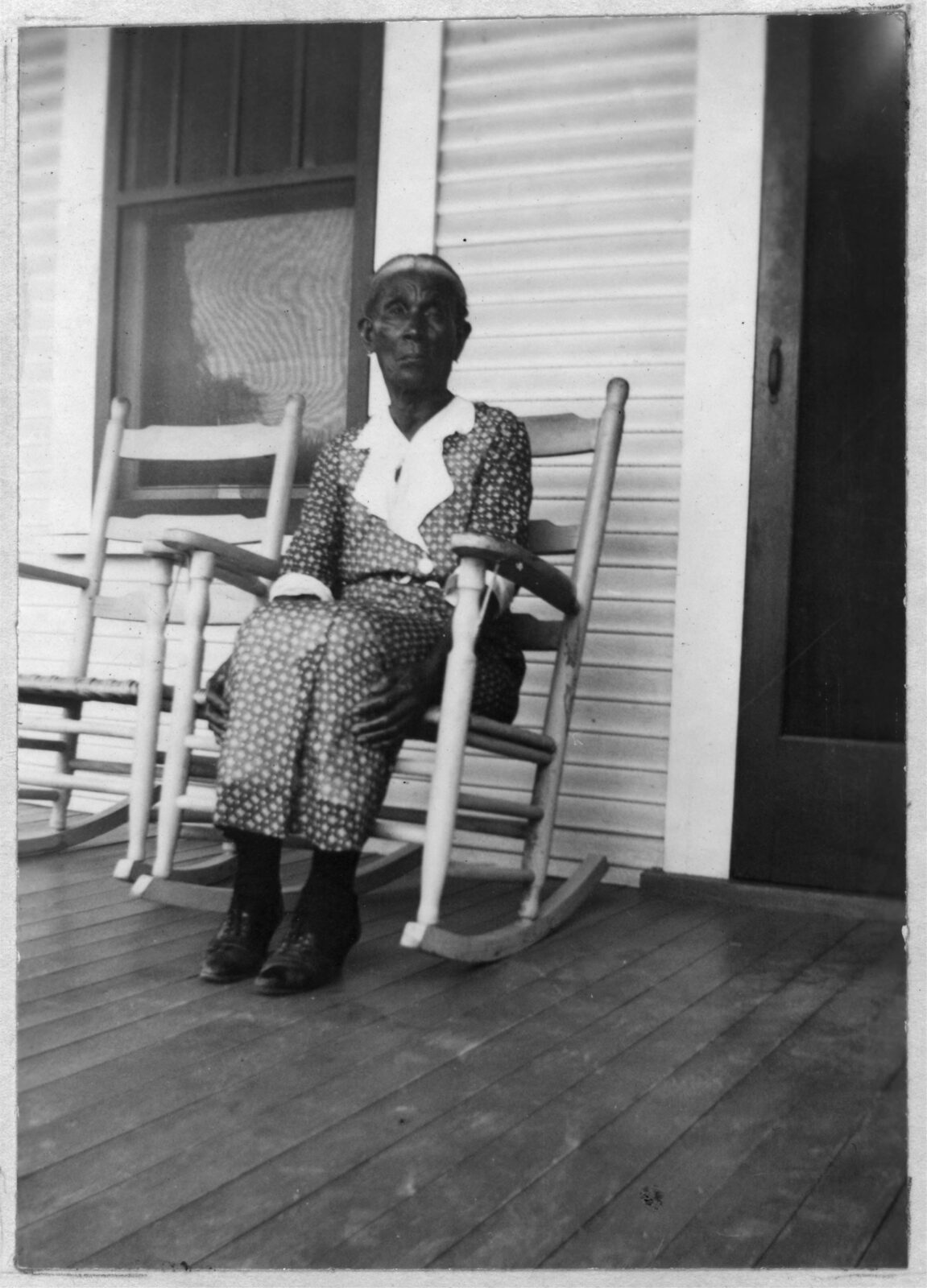
Adeline Cunningham
Adeline Cunningham was born in 1852 on Washington Greenlee Foley's vast plantation in Lavaca County, Texas, northeast of Hallettsville. It spread across Lavaca and Colorado counties, held more than a hundred enslaved people, and had its own cotton gin, grist mill, weaving house and blacksmith shop. Foley bought people every year from traveling traders who led them in tied together, but he never sold anyone.
"Dey was rough people and dey treat ev'rybody rough," she said. Two families often shared one dirt-floored cabin. Children were fed bread soaked in milk from a trough like a pig trough, using oyster shells as spoons, and field hands came in and dipped their dirty hands into the same trough. There were no holidays; on Sundays people ground corn and split rails. The enslaved were taken to the white church only occasionally. When they slipped into the woods to pray for freedom and someone shouted too loud, the overseer came and whipped them for praying to be set free.
She said a preacher had to hide his book because the enslavers feared reading would teach people how to escape. She saw a recaptured runaway hung up by one arm with irons on his knee and feet so his toes could not reach the ground, and told of another runaway who was blinded as punishment. Foley wanted to give the freed people garden land after the war, but his grandson, John Woods, refused, and they received no land or money. She married long after freedom and lived in San Antonio for about twenty years, in a very clean house kept with her granddaughter.
From the Federal Writers' Project slave narratives, 1936–1938. The interviewers wrote down their words in the 1930s, often in dialect spellings that reflect the interviewer more than the speaker.