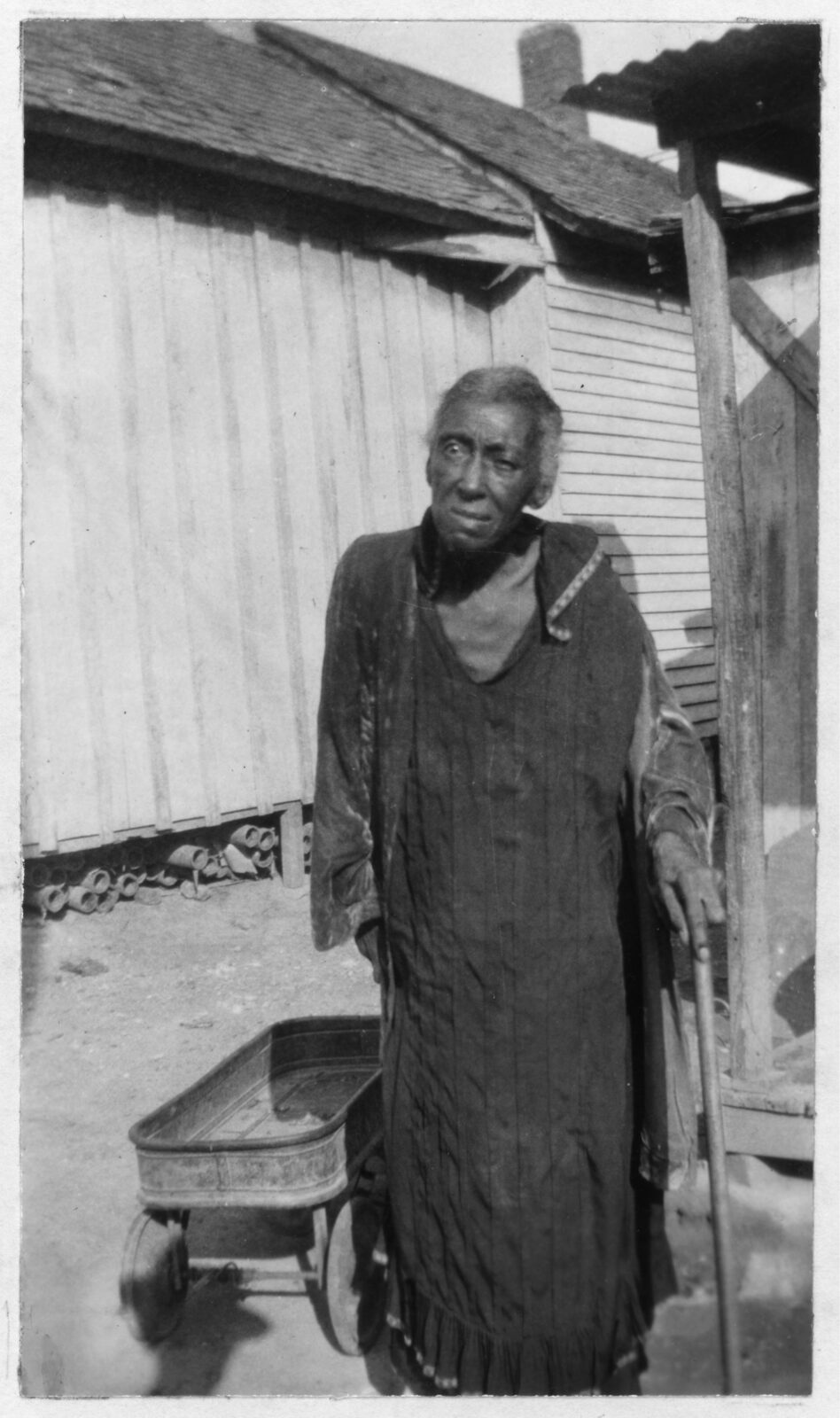
- Interviewed in
- Texas
- Age when photographed
- 81
Biography · formerly enslaved
Ann J. Edwards
A biography drawn from Ann's own account is being prepared. Their own words are below.
ME XVI TEXAS NARRATIVES PART 2 Prepared by the Federal Writers1 Project of the Works Progress Administration for the State of Texas INFORMANTS Easter, Willis Edwards, Anderson and Minerva Edwards, Ann J. Edwards, Mary Kincheon Elder, Lucinda Ellis, John Ezell, Lorenza 1 5 10 15 17 21 25 Farrow, Betty Finnely, John Ford, Sarah Forward, Millie Fowler, Louis Franklin, Chris Franks, Orelia Alexie Frazier, Rosanna 33 35 41 47 50 55 60 63 Gibson, Priscilla 66 Gilbert, Gabriel 68 Gilmore, Mattie 71 Goodman, Andrew 74 Grant, Austin 81 Green, James 87 Green, 0. W. 90 Green, Rosa 94 Green, VJilliam (Rev. Bill) 96 Grice, Pauline 98 Hadnot, Mandy Hamilton, William Harper, Pierce Harrell, Molly Hawthorne, Ann Hayes, James Haywood, Felix Henderson, Phoebe Hill, Albert Hoard, Rosina Holland, Tom Holman, Eliza 102 106 109 115 118 126 130 135 137 141 144 148 Holt, Larnce Homer, Bill Hooper, Scott Houston, Alice Howard, Josephine Hughes, Lizzie Hursey, Moses Hurt, Charley 151 153 157 159 163 166 169 172 Ingrain, Wash 177 Jackson, Carter J, Jackson, James Jackson, Maggie Jackson, Martin Jackson, Nancy Jackson, Richard Janes, John Johns, Thomas Johns, Mrs. Thomas Johnson, Gus Johnson, Harry Johnson, James D. Johnson, Mary Johnson, Mary Ellen Johnson, Pauline,and Boudreaux, Felice Johnson, Spence Jones, Harriet Jones, Lewis Jones, Liza Jones, Lizzie Jones, Toby 180 182 185 187 193 195 198 201 205 208 212 216 219 223 225 228 231 237 241 246 249 Kelly, Pinkie Kilgore, Sam Kinchlow, Ben Kindred, Mary King, Nancy King, Silvia 253 255 260 285 288 290 ILLUSTRATIONS Facing page Anderson and Minerva Edwards 5 Ann J. Edwards 10 Mary Kincheon Edwards 15 John Ellis 21 Lorenza Ezell ,. 25 Betty Farrow 33 Sarah Ford 41 Louis Fowler 50 Orelia Alexie Franks 60 Priscilla Gibson 66 Andrew Goodman 74 Austin…
From the Federal Writers' Project slave narratives, 1936–1938. The interviewers wrote down their words in the 1930s, often in dialect spellings that reflect the interviewer more than the speaker.