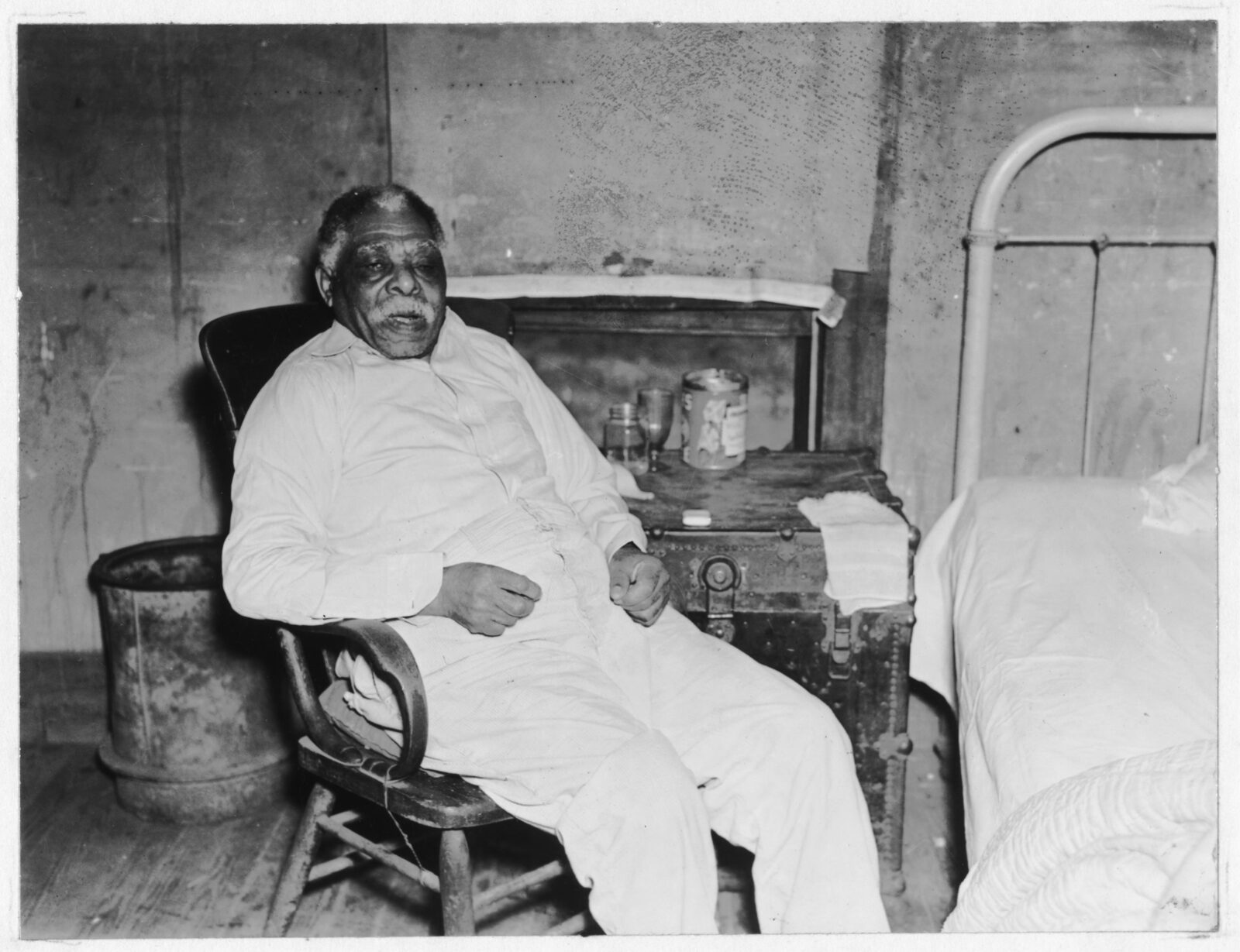
- Born
- July 25, 1832; near Greenville, North Carolina
- Interviewed in
- Oklahoma
- Age when photographed
- 105
Anthony Dawson
Anthony Dawson was 105 years old and living in Tulsa, Oklahoma, when he was interviewed. He was born on July 25, 1832, on Levi Dawson's plantation eighteen miles east of Greenville, North Carolina; he knew the date because the enslaver kept a book of the births of the people he held. The plantation covered more than 500 acres of cotton, tobacco and grain. The enslaver's wife, Susie, born an Isley, had brought forty enslaved people from her father as a wedding gift, and she would not let her husband punish any of them. Anthony's father, also named Anthony, was the blacksmith; his mother, Chanie, was head of the house staff. His uncle John, who could read, write and figure, was the plantation's Black overlooker; there was no white overseer.
He remembered the patroller song the children sang in the moonlight, and wondered whether white people had made it up to keep the enslaved in line. He told of two young men who tried to escape. One was picked up on the road by men posing as an overseer's party who turned out to be Underground Railroad workers; he reached the North, joined the army and was killed. The other was tricked by a patroller who took a bribe his mother had stolen from the big house, and he was found shot dead in the woods. His mother was sold to a trader right away. "Devils and good people walking in de road at de same time," he said, "and nobody could tell one from t'other."
He was a house boy as a child and was working in the fields by the time the war began. The enslaver allowed preaching and gave passes to camp meetings ten or fifteen miles away. Anthony said the people there didn't put stock in conjure, though they used herbs and roots for common ailments. Later in life he moved to Oklahoma, where a son of his served in the First World War.
From the Federal Writers' Project slave narratives, 1936–1938. The interviewers wrote down their words in the 1930s, often in dialect spellings that reflect the interviewer more than the speaker.