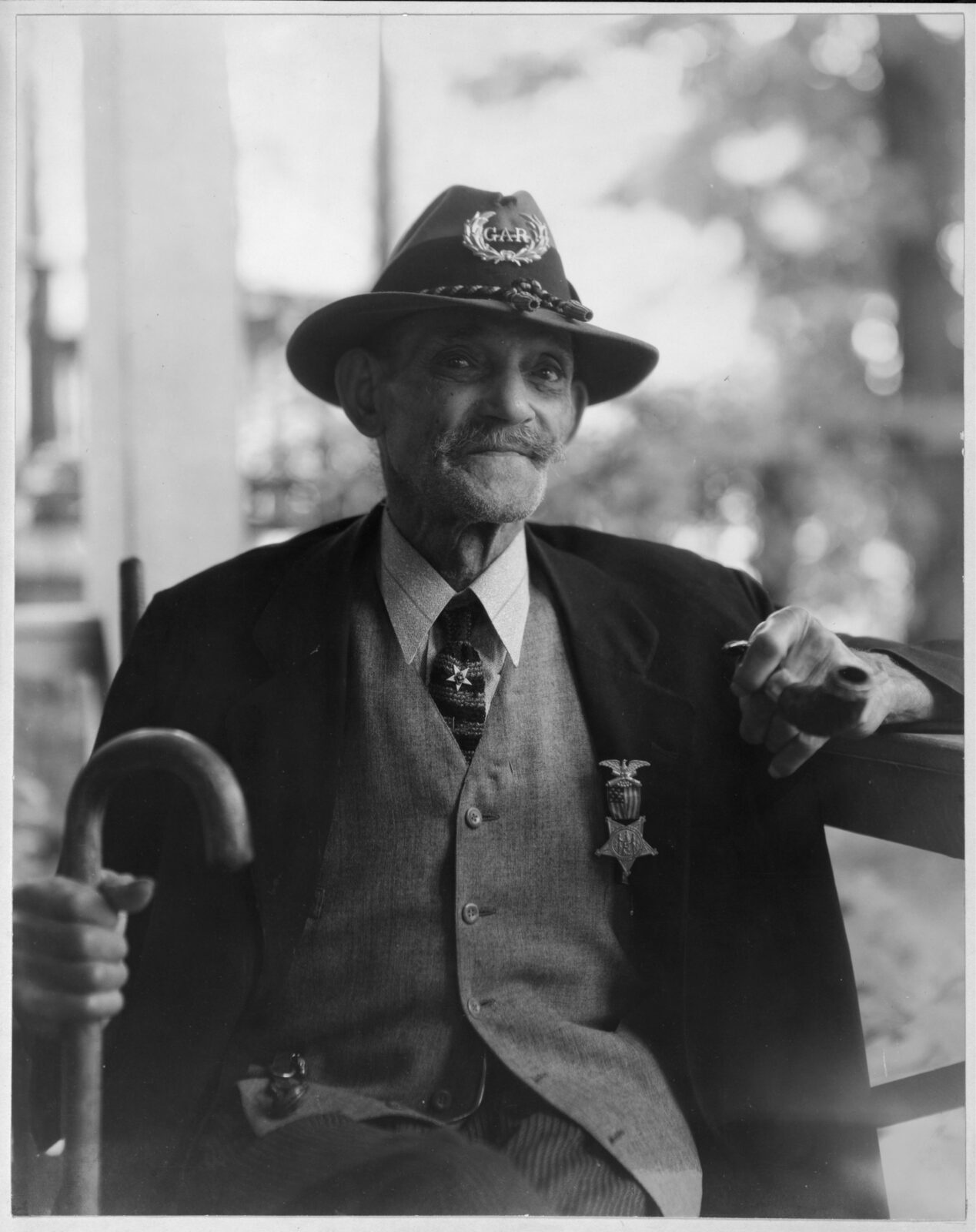
- Interviewed in
- Ohio
- Age when photographed
- 92
Biography · formerly enslaved
Charles H. Anderson
A biography drawn from Charles's own account is being prepared. Their own words are below.
be Brown, Ben Burke, Sarah Woods King, Julia 6 7 10 Jackson, George 45 Jamison, Rev* Perry Sid 50,55 Williams, Julia Williams, Rev. Williams, William 102,108 111 114 ILLUSTRATIONS Facing page Charles H. Anderson 1 Melissa Barden 6 Phoebe Bost 10 James Campbell 18 Angeline Lester Richard Toler - 62 97 34004)5 Ruth Thompson, interviewing Graff, editing* - Ex-Slave Interview Cincinnati -j Interview with Charles H. Anderson, 3122 Fredonia St., Cincinnati, Ohio. "Life experience excels all reading. from every class of people. Every place you go, you learn something Books are just for a memory, to keep history and the like, but I don't have to go huntinf in libraries, I got one in my own head, for you can't forget what you learn from experience." The old man speaking is a living example of his theory, and, judging from his bearing, his experience has given him a philosophical outlook which comprehends love, gentleness and wisdom. Charles H. Anderson, 3122 Fredonia Street, was born December 23, 1845, in Richmond, Virginia, as a slave belonging to J. L. T.'foodson, grocer, "an exceedingly good owner - not cruel to anyone". With his mother, father, and 15 brothers and sisters, he lived at the Woodson home in the city, some of the time in a cabin in the rear, but mostly in the "big house". Favored of all the slaves, he was trusted to go to the cash drawer for spending money, and permitted to help himself to candy and all he wanted to eat. With the help of the mistress, his mother made all his clothes, and he was "about as well dressed as anybody". "I always associated with high-class folks, but I never went to church then, or to school a day in my life. My owner never sent me or my brothers, and then when free schools came in, education wasn't on my mind. I read a few words, and…
From the Federal Writers' Project slave narratives, 1936–1938. The interviewers wrote down their words in the 1930s, often in dialect spellings that reflect the interviewer more than the speaker.