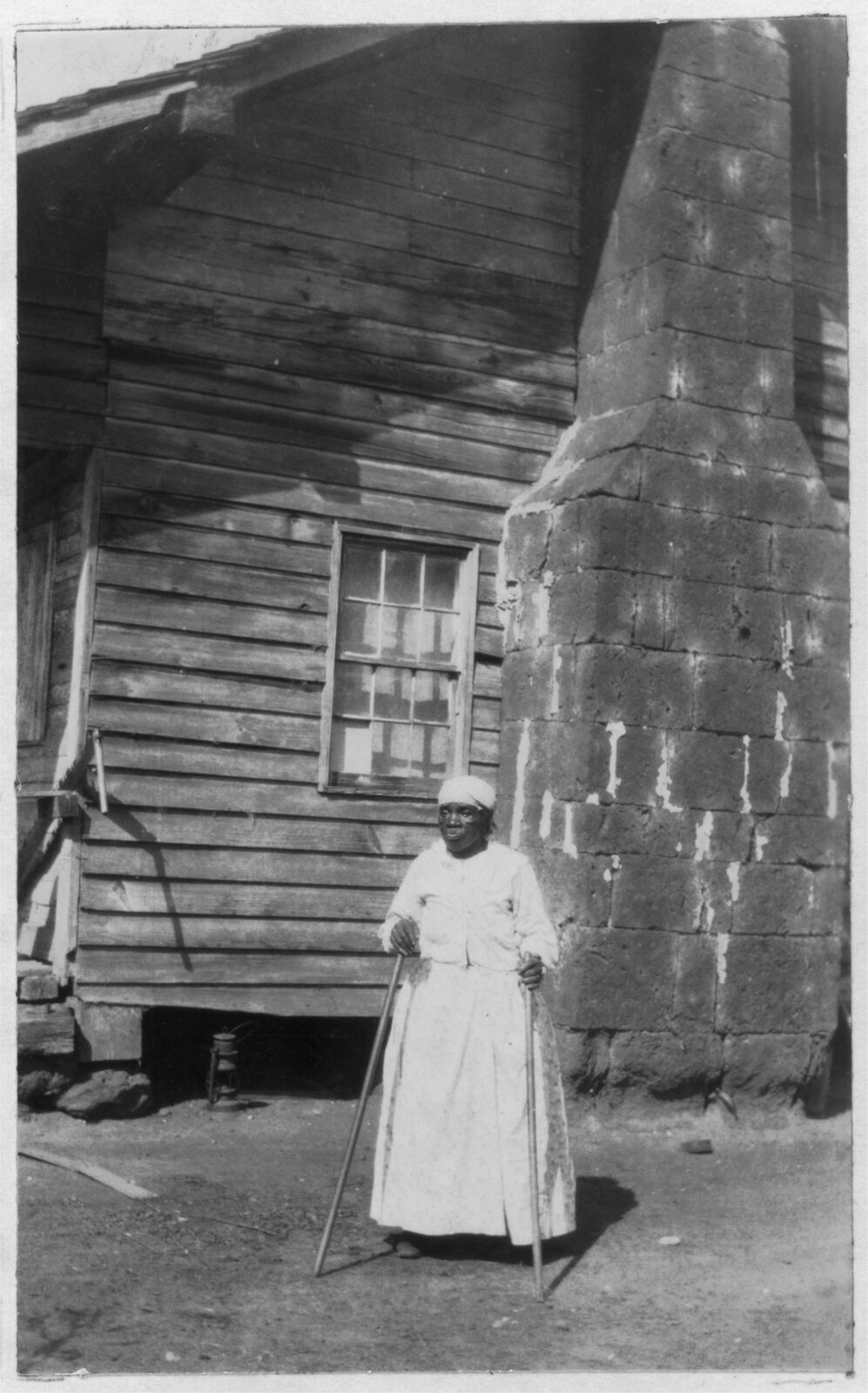
- Interviewed in
- Texas
- Age when photographed
- 94
Biography · formerly enslaved
Eda Rains
A biography drawn from Eda's own account is being prepared. Their own words are below.
171 Facing page Ellen Payne 177 Henderson Perkins 180 Daniel Phillips 183 Ellen Polk 188 Betty Powers 190 Tillie R. Powers 193 John Price and wife I.Iiranda 197 Jennie Proctor 208 Eda Rains 225 Millie Randall 227 Laura Redmoun 229 Elsie Reece 233 Mary Reynolds 236 Walter Himai 247 Gill Ruffin 262 Martin Ruffin 265 Aaron Russel 270 420176 EX-SLAVE STORIES (Texas) Page One Uncle Cinto Lewist ex-slave, claims to "be 111 years old. He lived in a brick cabin with his wife, Aunt Lucy, on the Huntin^ton Plantation, in Brazoria Co.f Texas. Miss Kate Huntington sa ~s the cabin occupied by the old couple is part of the old slave quarters built by J. Greenville McNeel, who owned the plantation before Marion Euntington, Miss Kate's father, bought it. Although Uncle Cinto claims to be 111, he says he was n?jaed San Jacinto because he was born during the "San Jacinte Warw , which would make his age 101. "Yes, suh, I1 s Cinto. That's Lucy over there, she ay wife and I calls her Bed Heifer, fcause her papa's name was Juan and he was a Mexican. She and me marry right after 'mancipation. We come long way and we gain1 to die together, "They named me San Jacint 'cajase I's born durin1 de San Jacinte war, but they calls me Cinto. I's born in Fort Bond County, up near Richmond,and my old marster was Marse Dave Randen, and his wife, Miss Nancy, was my missus. She was sister to Marse John Mc- Neel, what with his brothers owned all de land hereabouts. *I 'members once I slips away come dark from de plantation, with seme others. We is slippin' 'long quiet like and a paddle roller U 1 jump out from behia a bush and say, '^et's see your pass.' We didn't have none but I has a pieee of paper and I gives it to him and he walks t o where it am more light, and then we run, right through eld burdock…
From the Federal Writers' Project slave narratives, 1936–1938. The interviewers wrote down their words in the 1930s, often in dialect spellings that reflect the interviewer more than the speaker.