- Born
- About 1859; Calcasieu Parish (now Beauregard Parish), Louisiana
- Interviewed in
- Texas
Ellen Butler
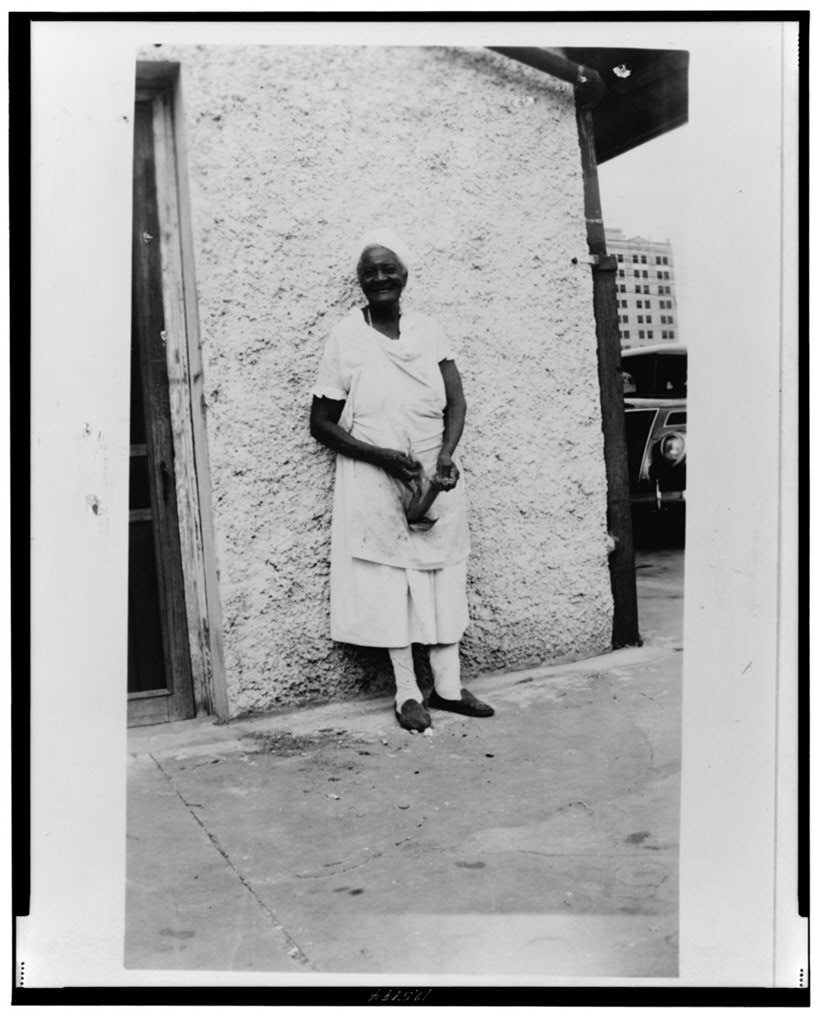
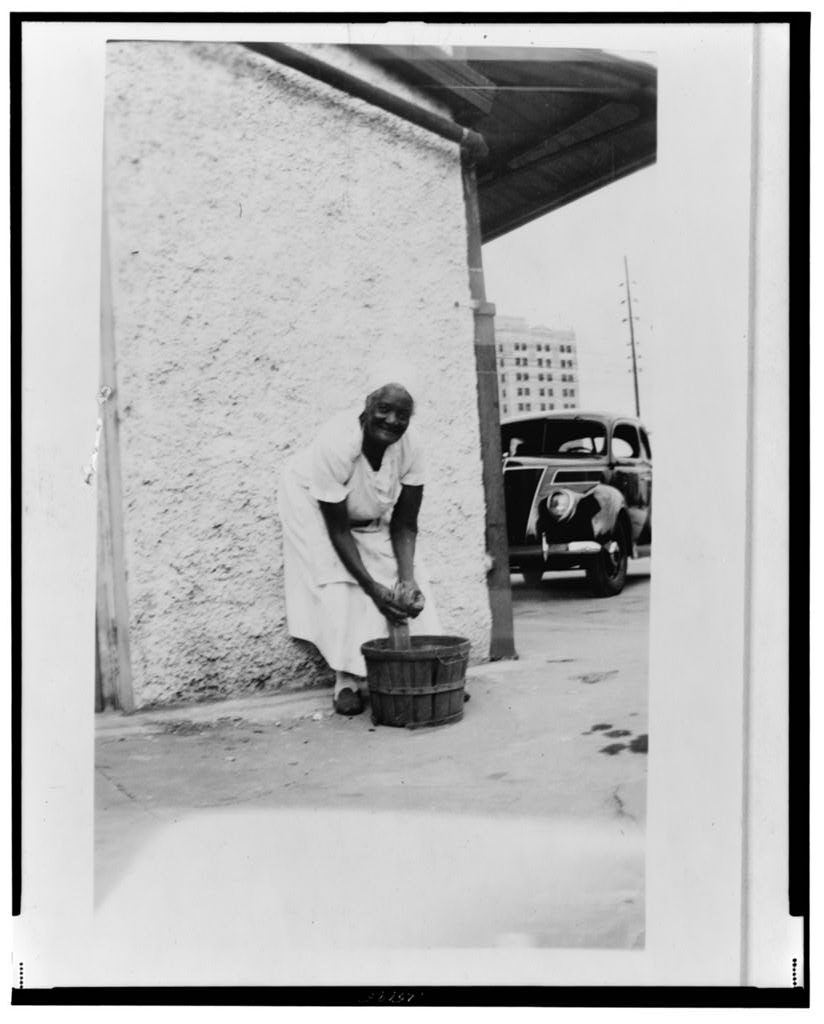
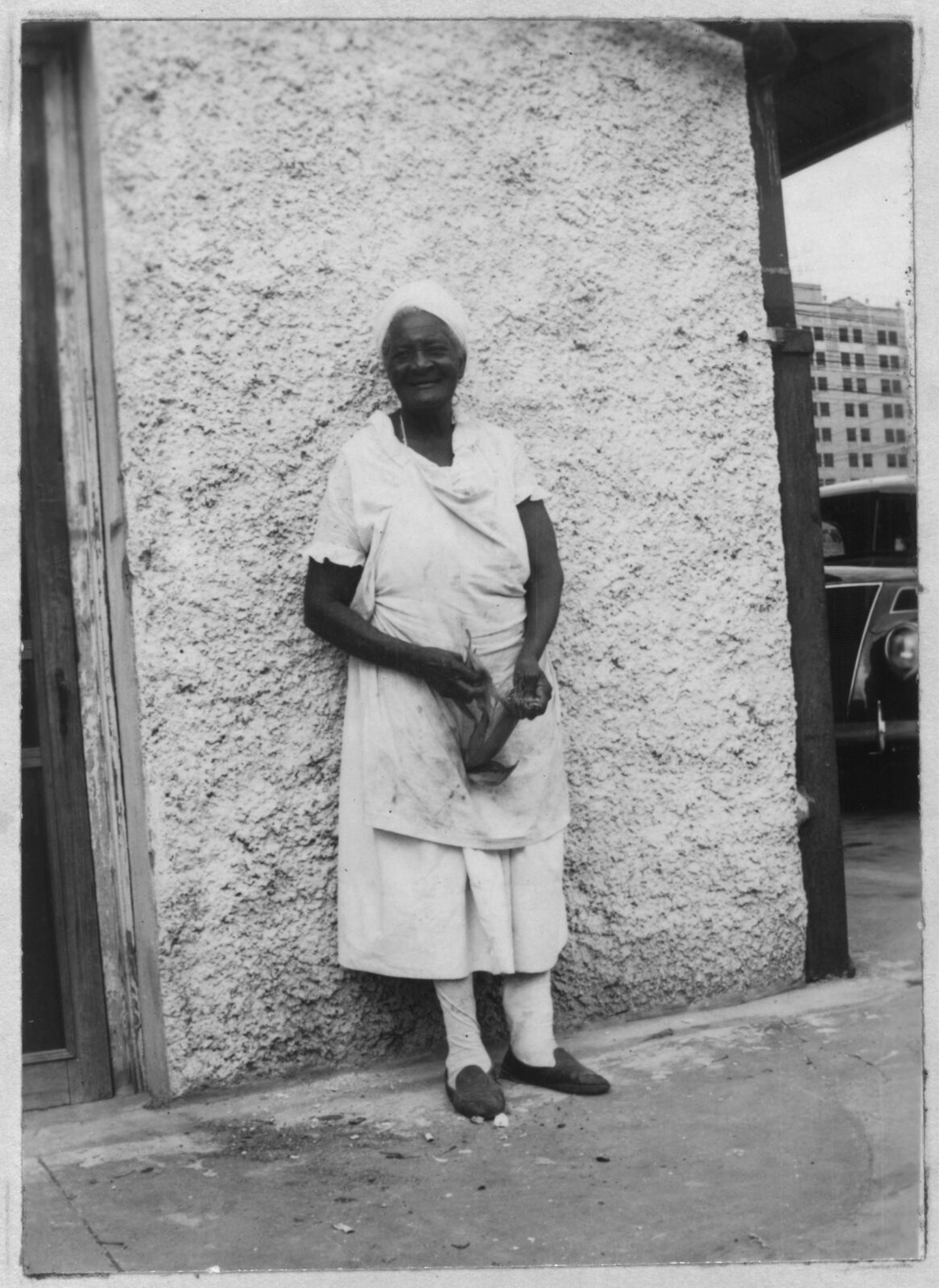
Ellen Butler was born on Richmond Butler's plantation, called Bagdad, on Whiskey Chitto Creek in what is now Beauregard Parish, Louisiana. About 200 people were enslaved there. She was six when freedom came. She did not remember her father; her mother was Dicey Ann Butler, and she had three brothers and seven sisters. As a newborn she was so small, she was told, that she was wrapped in cotton and laid in a coffee pot.
The family lived in a one-room log house with a dirt floor and slept on bare planks. Children ate from a trough with wooden paddles. As soon as she was big enough she carried water to the field in gourds. The enslaver did not allow church, so people prayed for freedom in pits dug in the fields. When the white family went out, they wrote in the meal and flour with their fingers to detect theft, or scratched marks in the dirt by the door, and Ellen said that was how the enslaved learned to write. People were so poorly fed that after field work they went to work for neighbors for food. They made their own medicines from roots and bark. The enslaver beat people constantly, with a strap about eight inches wide.
Her brother once told the enslaver that one day he would have to come begging food from the people he enslaved. After the war, she said, the man lost everything in West Texas and did come to her brother asking for food and shelter, saying that if he had it to do over he would not treat people so badly. When her mother told them they were free, the family walked to Sugartown, eight miles away, her brother carrying her across a pond. She later lived in Beaumont, Texas.
From the Federal Writers' Project slave narratives, 1936–1938. The interviewers wrote down their words in the 1930s, often in dialect spellings that reflect the interviewer more than the speaker.