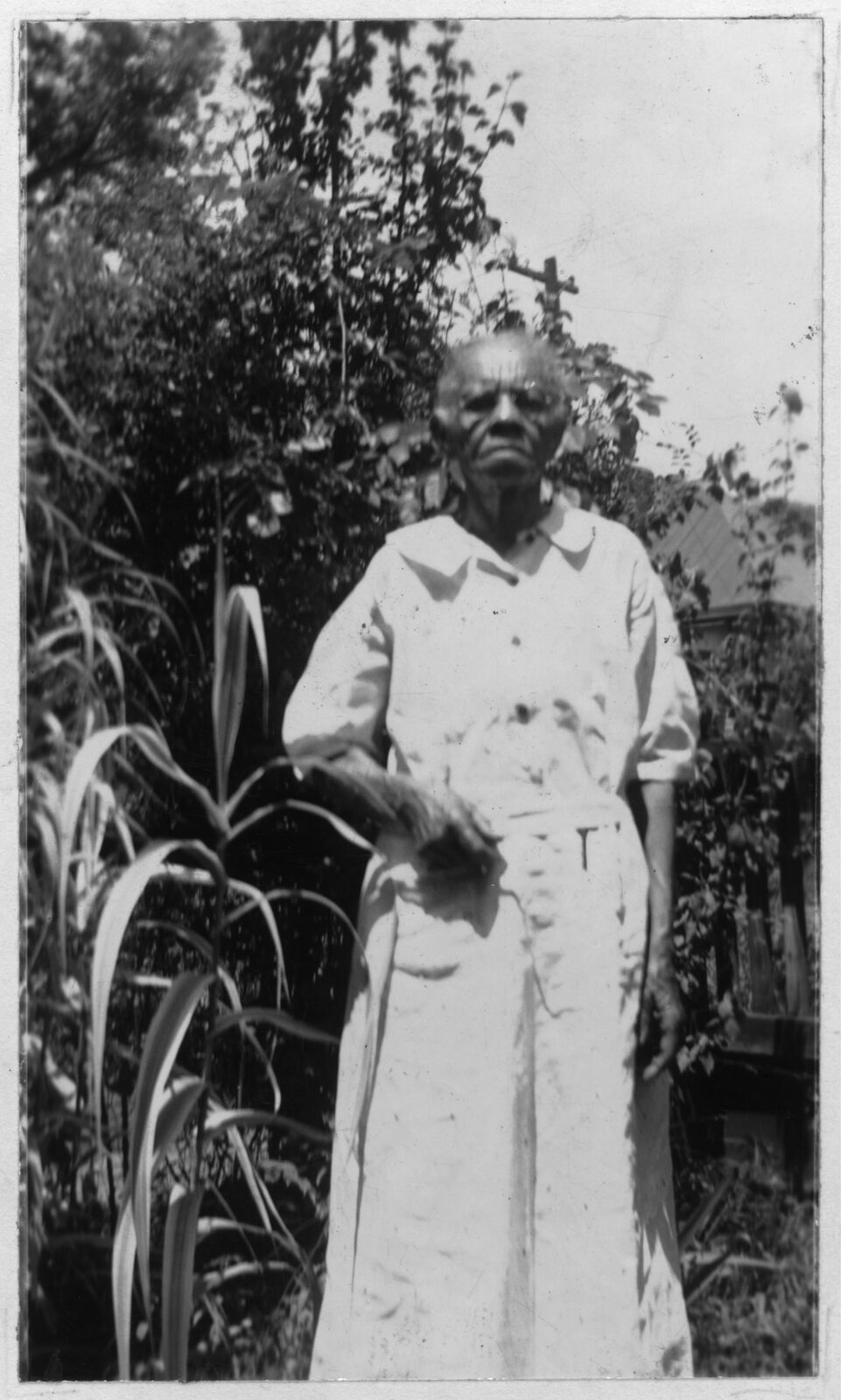
- Born
- About 1852-53 (84 or 85 when interviewed)
- Interviewed in
- Alabama
Emma L. Howard
Emma L. Howard was rocking at her home at 170 Elmwood Street in Montgomery, Alabama, when she sang her interviewer an old slave song, "Mammy, is Massa gwine sell us tomorrow?" She said it was one of the saddest songs they sang and always made her cry. She was enslaved by William and Georgiana Shepherd in Lowndes County, between Mac's Switch and Morgansville. She remembered her sisters Nellie, Harriett and Liza, and the others who worked the place: Edie the laundress, Arrie the weaver, Becky, Melia, Aunt Mary, Ed, John, Uncle George the house man and his wife Aunt Evalina, the cook.
As the only light-skinned child in her family, she was raised in the big house. She swept the porches and yards, churned, kept the flies off her mistress with a big fan, and played games with the white children. She said whippings were given for only two things, a botched hog-killing or not being clean on Monday morning, and that the enslaver sat on his horse to see that only a set number of blows was given, delivered by the Black foreman, Jake. Once, sent on an errand to the station, the children dawdled picking flowers and tried to give them to him, and he switched her leg anyway.
She said that by freedom all the Shepherds' servants had been taught to read and write, and that each family had saved enough money from selling its own pigs and hens to buy a small home.
From the Federal Writers' Project slave narratives, 1936–1938. The interviewers wrote down their words in the 1930s, often in dialect spellings that reflect the interviewer more than the speaker.