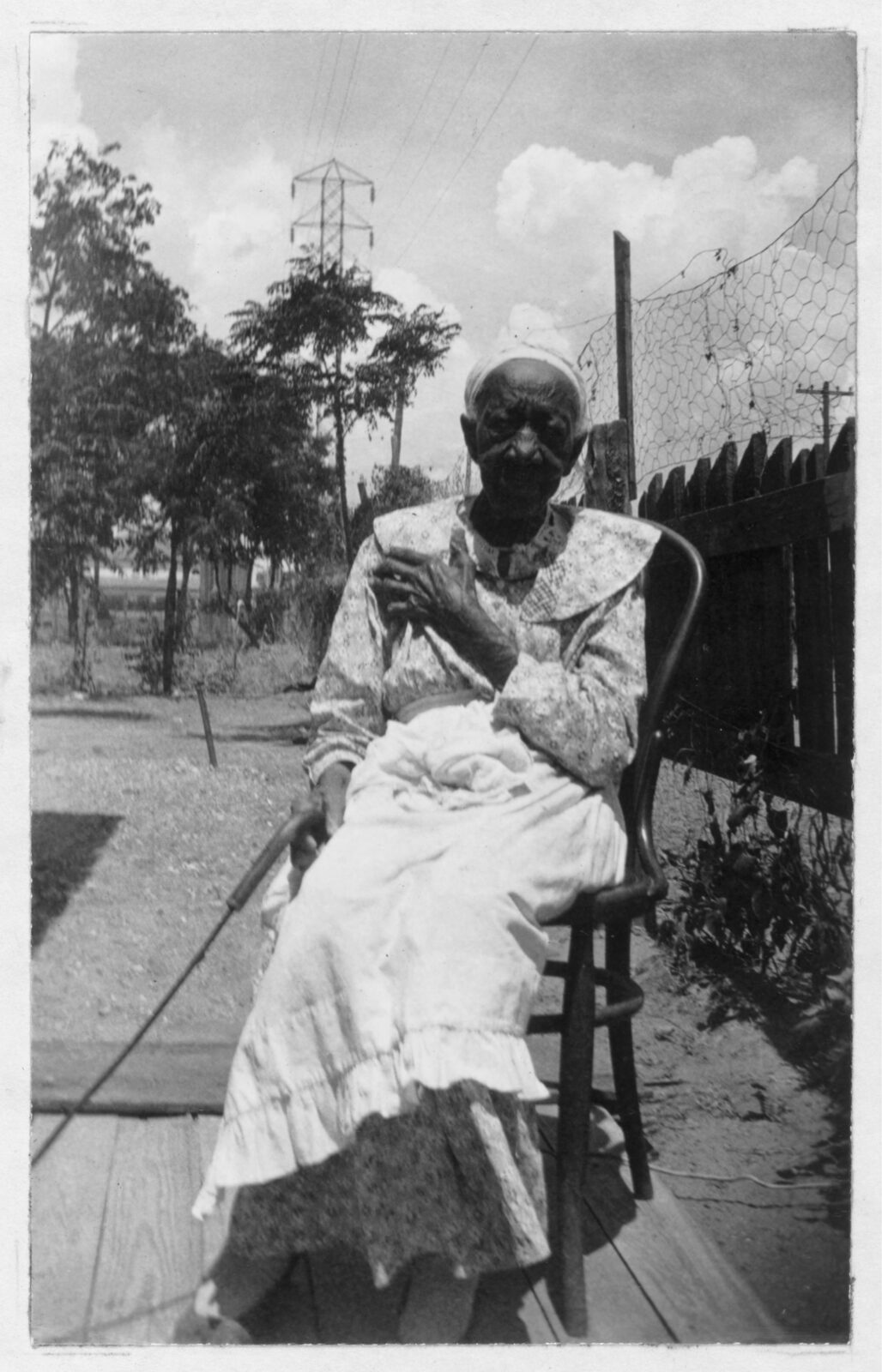
- Interviewed in
- Texas
Biography · formerly enslaved
Fannie Brown
A biography drawn from Fannie's own account is being prepared. Their own words are below.
ack 87 Betty Bormer (Bonner) 109 Issabella Boyd 114 James Boyd 117 Monroe Brackins 124 Wes Brady 133 William Branch 143 Clara Brim 147 Sylvester Brooks 149 Donaville Broussard 151 Fannie Brown 154 Fred Brown 156 James Brown 160 Josie Brown 163 Facing page Zek Brown 166 Martha Spence Bunton 174 Ellen Butler 176 Simp Campbell 191 James Cape 193 Cato Carter 202 Amos Clark1 s Sorghum Mill 220 Amos Clark 220 Anne Clark 223 Preely Coleman 240 Steve Connally 249 Steve Connallyfs House ' 249 Valmar Cormier 252 John Crawford 257 Green Cumby 260 Tempie Cummins 263 Adeline Cunningham 266 Will Daily's House 269 Will Daily 269 Julia Francis Daniels 273 Katie Darling 278 Carey Davenport 281 Campbell Davis 285 Nelsen Denson 305 430241 EX-SLATE STORIES (Texas) Page One WILL ADAMS was bom in 1857, a slave of Dave Gavin, in Harrison Co.f Texas* He remained with the Gavins until 1885, then farmed for himself. Will lives alone in Marshall, Texas, supported by a $13,00 monthly pension. M My folks allus belongs to the Cavins and wore their name till after fmaacipation. Pa and ma was named Preeman and Amelia Gavin and Massa Dava fotches them to Texas from Alabama, along with ma's mother, what we called Maria. The Cavins allus thank lots of their niggers and Grandma Maria say* 'Why shouldn't they - it was their money.1 She say there was plenty Indians here when they settled this country and they bought and traded with them without killin' them, if they could. jus1 pilfer and loaf fround all the time. The Indians was poor folks, The niggers was a heap sight better off than they was, 'cause we had plenty to eat and a place to stay. 11 Young Massa Tom was my special massa and he still lives here. Old Man Dave seemed to think more of his niggers than anybody and we thunk lots of our white folks.…
From the Federal Writers' Project slave narratives, 1936–1938. The interviewers wrote down their words in the 1930s, often in dialect spellings that reflect the interviewer more than the speaker.