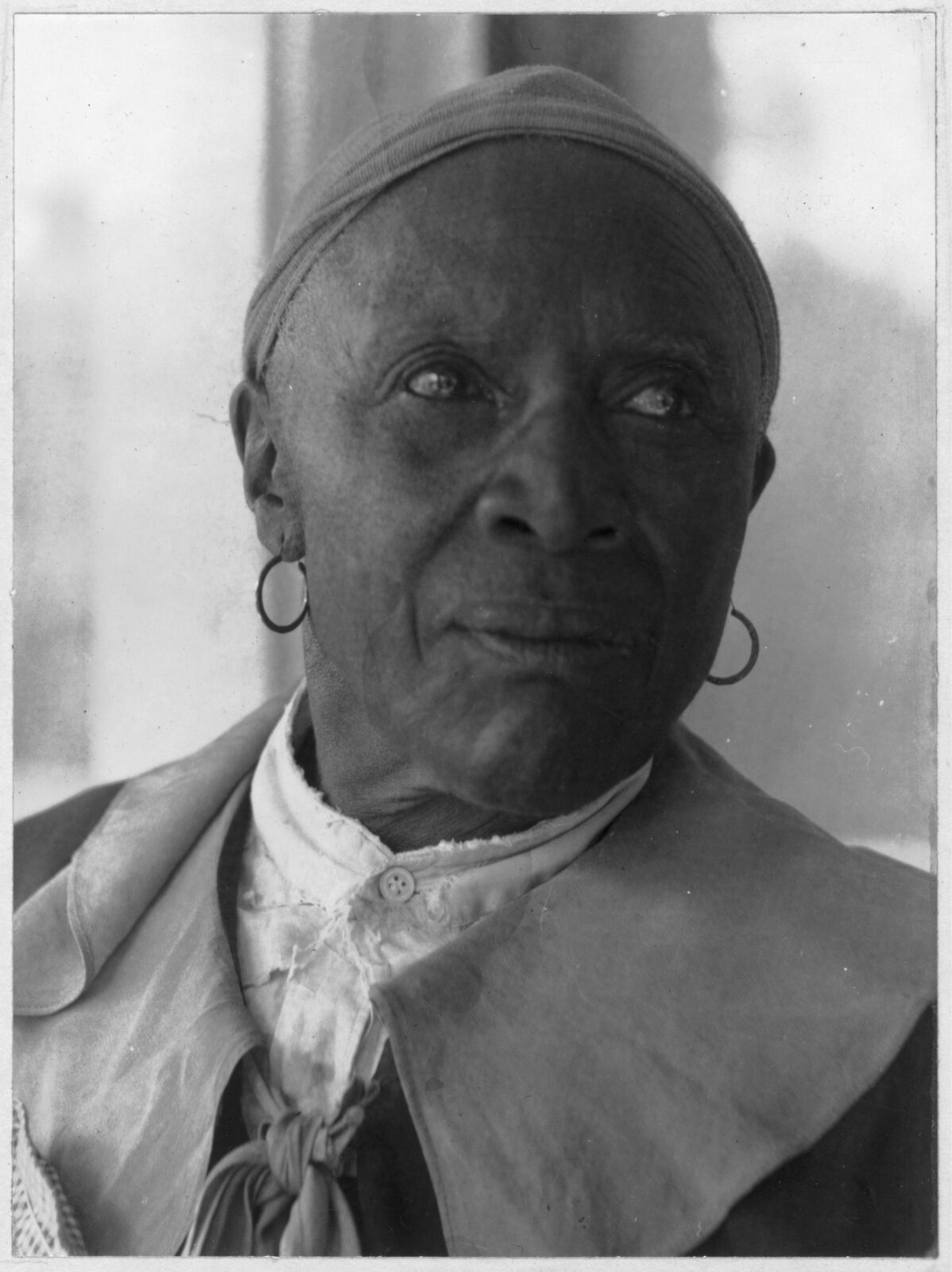
- Born
- Not stated
- Interviewed in
- North Carolina
- Age when photographed
- 88
Fannie Moore
Fannie Moore was interviewed by Marjorie Jones in September 1937 at 151 Valley Street in Asheville, North Carolina. She was born on Jim Moore's plantation in Moore, South Carolina, a vast place of thousands of acres with the Tyger River running through the middle: the big house on one side, the dirt-daubed cabins of the quarters on the other. Her father, Stephen Moore, was the plantation blacksmith; his mother had been brought from Africa. Fannie's mother had twelve children. She worked the fields all day, then pieced quilts and spun four cuts of thread for the white family every night while Fannie held a burning pine knot for light. Fannie carried a scar from pitch that dripped on her arm when her brother fell asleep holding it.
The enslaver's mother ran the household with a cowhide and, Fannie said, believed the people she enslaved needed nothing to eat. The overseer hated Fannie's mother because she fought him for beating her children, and she was whipped for it more than for anything else. Fannie saw her three oldest siblings split rails knee-deep in snow while the overseer grinned. One day, plowing, her mother began shouting and singing. When the old woman threatened her, she answered, "I's saved... some day we never be slaves," and walked back to the field singing while the cowhide fell across her back. Her brother George died of fever while their mother was in the field; Fannie thought he was sleeping.
She described the terror when speculators came through the fields to buy, and women sold away from their children forever. She told of a dance in the quarters broken up by patrollers, where Uncle Joe's son, tired of beatings, fought back and was killed with a blow to the head.
From the Federal Writers' Project slave narratives, 1936–1938. The interviewers wrote down their words in the 1930s, often in dialect spellings that reflect the interviewer more than the speaker.