- Born
- About 1856 (nine at freedom)
- Interviewed in
- Alabama
- Age when photographed
- 91
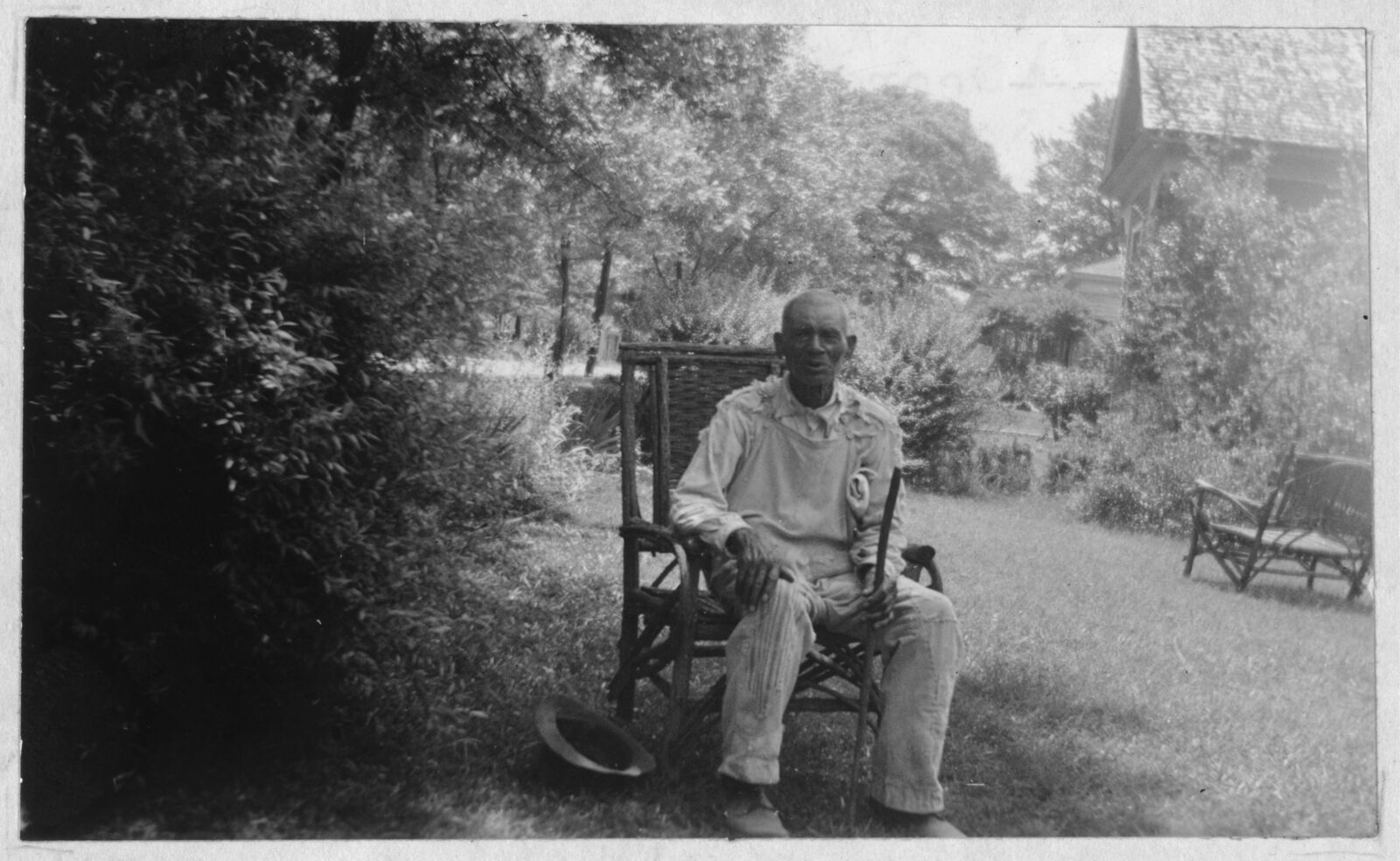
George Strickland
George Strickland was 91, alert and blinking in the sunlight in front of his cabin in Opelika, Alabama, when he was interviewed. He was nine when freedom came. His parents, Cleveland and Eve Strickland, came from Mississippi, and he had three siblings: Will, Sam and Missouri. They were enslaved by John Strickland, a circuit preacher, and his wife Polly, who held about a hundred people. During the war the household "refugeed" from Mississippi to Mobile, then Selma, Montgomery and finally Uchee near Columbus, Georgia, where they stayed until freedom.
The quarters had dirt floors and beds of pine straw nailed to the walls. Children ate greens and potlikker from wooden troughs with mussel shells or gourds. When the preacher was away, the overseer whipped people so badly that the mistress ran him off. George remembered people being tied to trees to be whipped, chained out all night for punishment, and sold from the block for $1,000 to $1,500 after buyers felt their muscles.
But "corn shucking was the greatest thing of all," with music from a gourd fiddle strung with horsehair and a handsaw played with a knife, and a leader singing from the top of the corn pile. He said he had never sworn an oath or touched anything that didn't belong to him.
From the Federal Writers' Project slave narratives, 1936–1938. The interviewers wrote down their words in the 1930s, often in dialect spellings that reflect the interviewer more than the speaker.