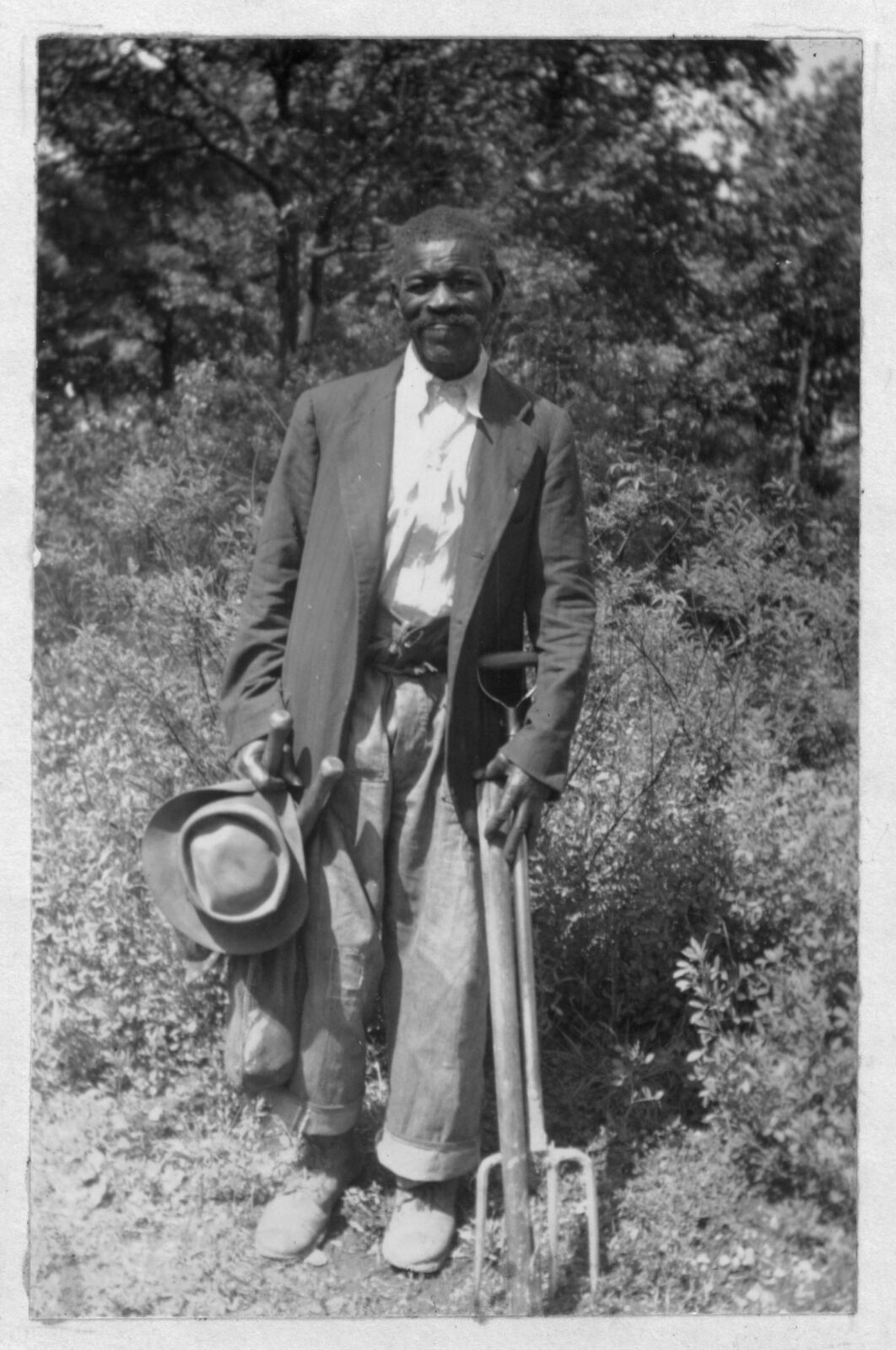
- Born
- About 1847 (said he was about ninety)
- Interviewed in
- Alabama
Gus Brown
Gus Brown said he was about ninety when he was interviewed in Birmingham, Alabama. He grew up on William Brown's plantation near Richmond, Virginia, a grain dealer's estate with a columned house, where Gus waited on the table at large dinners and went swimming with the enslaver's sons. Before the war, the enslaver had trusted servants gather the silver and valuables and bury them in the forest under a marked tree. No one ever told the Union troops where it was.
When the war came, Gus went with William Brown as his body servant, and he described a bullet knocking off Brown's hat while Gus stood beside him. He said he saw Stonewall Jackson, "a big man with long whiskers," and remembered going without food for days. In his telling, the army wasn't beaten but starved out. He told the interviewer that he liked the Union soldiers who came afterward and that most people were glad when freedom came.
They stayed until the old enslaver died. Gus then came to Birmingham with the Seaboard Air Line railroad and stayed. He considered himself a Confederate veteran, but his medals had burned with his house and he received no pension. Too old to work but still having to, he thanked the interviewer for the quarter that would buy him a little food.
From the Federal Writers' Project slave narratives, 1936–1938. The interviewers wrote down their words in the 1930s, often in dialect spellings that reflect the interviewer more than the speaker.