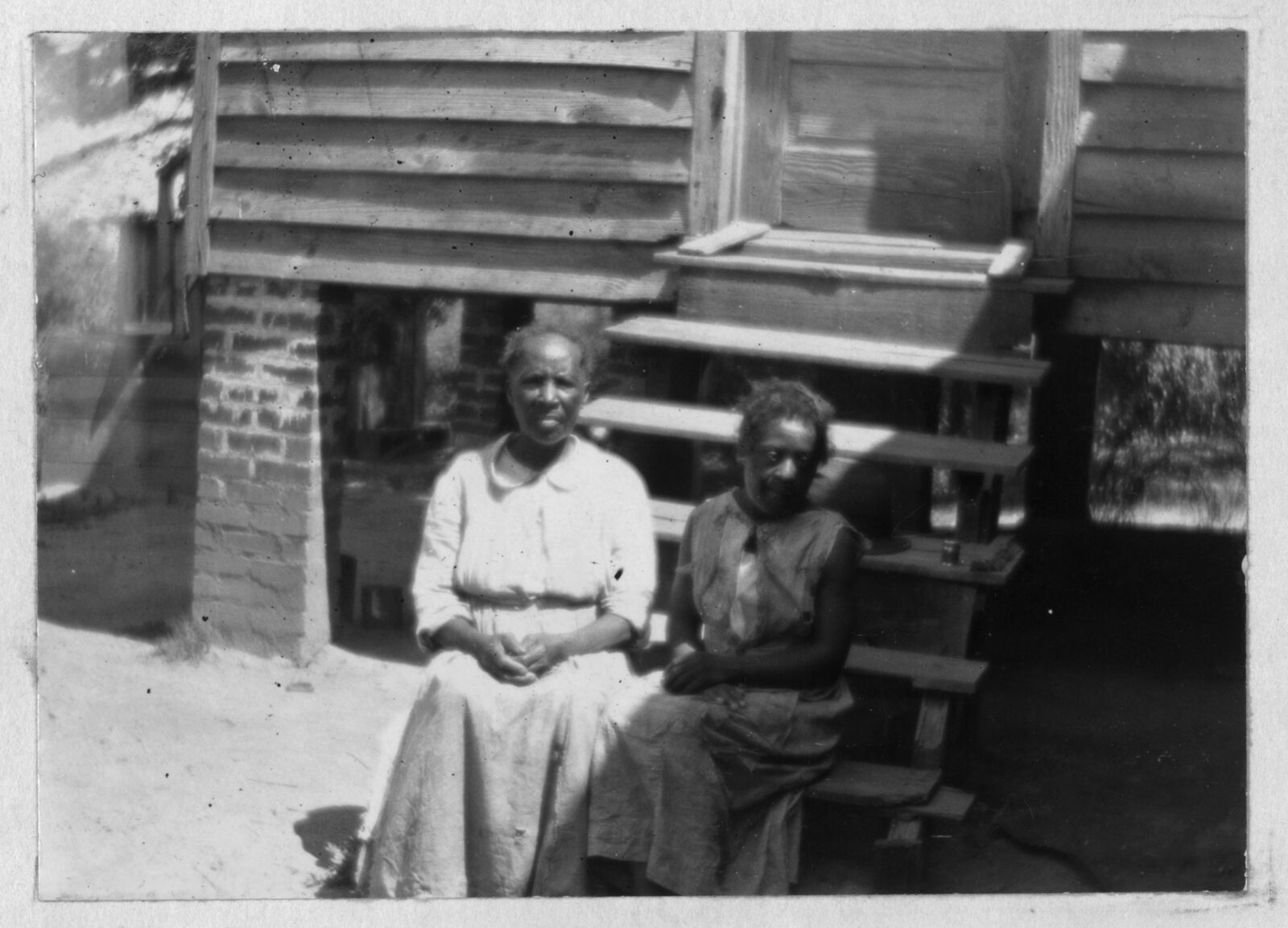
- Interviewed in
- Alabama
- Age when photographed
- 80
Biography · formerly enslaved
Hattie Anne Nettles
A biography drawn from Hattie's own account is being prepared. Their own words are below.
uxauum v vlivS 233 Abraham Jones' Back Yard 233 Abraham Jones' House 233 Lucindy Lawrence Jurdon 242 Tom McAlpin 268 Anne R'addox 272 Frank k'snef ee 278 Isaam Morgan 282 Facing page Hattie Anne Nettles 297 Rev* Wade Owens 306 Molly Parker 309 Lindy Patton 311 Simon Phillips 312 Carrie Pollard 318 Nicey Pugh 323 Mary Rice 329 Cornelia Robinson 331 Maugan Shepherd 340 Allen Sims 342 Frank Smith 345 Theodore Fontaine Stewart 356 George Strickland 359 Daniel Taylor 367 Ellen Thomas 376 Alonza Fantroy Toombs 383 William Henry Towns 385 Stepney Underwood 394 Simon Walker 404 Cindy Washington 407 Abe Whitess 423 George Young 432 ^ \ Week ending Aug.6, X9$7* S-260 v \ S-200 1. M**? A. Poole, j[i Identification 1 N0.OI49-4366 Federal Writers Project,Dist.2. WPA Project 3609, Mobile, Ala. CHARLH AARONS, EX-SLATE, SATS HE LOVED YOUNG MAESTER JOHff. (Written by Mary A. Poole.) Some friends driving to Oak Grove, Ala., gave the writer the opportunity on August 4"&h to interview an old ex-slave, Charlie Aarons, who is quite venerable in appearance, and who, when asked his age, replied: "Madam I dont know but I sure been 'round here long time", and when asked how old he was at the time of the Surrender he answered: "I was a man able to do a man's work so I 'spects I was eighteen or twenty years old." Uncle Charlie as he is known among his own color and the mhite people who knows him, told the writer he was born at Petersburg 7a., and his parents, Aaron and Louisa, were owned by a Mr. J.H.White, who had a store in the city, but no plantation. His parents had three children, two boys and one girl, and when Uncle Charlie was about ten years of age, he waa sold by Mr. White to a speculator named Jones who brought him to Mobile. He recalled being placed on the block, at the slave mart on…
From the Federal Writers' Project slave narratives, 1936–1938. The interviewers wrote down their words in the 1930s, often in dialect spellings that reflect the interviewer more than the speaker.