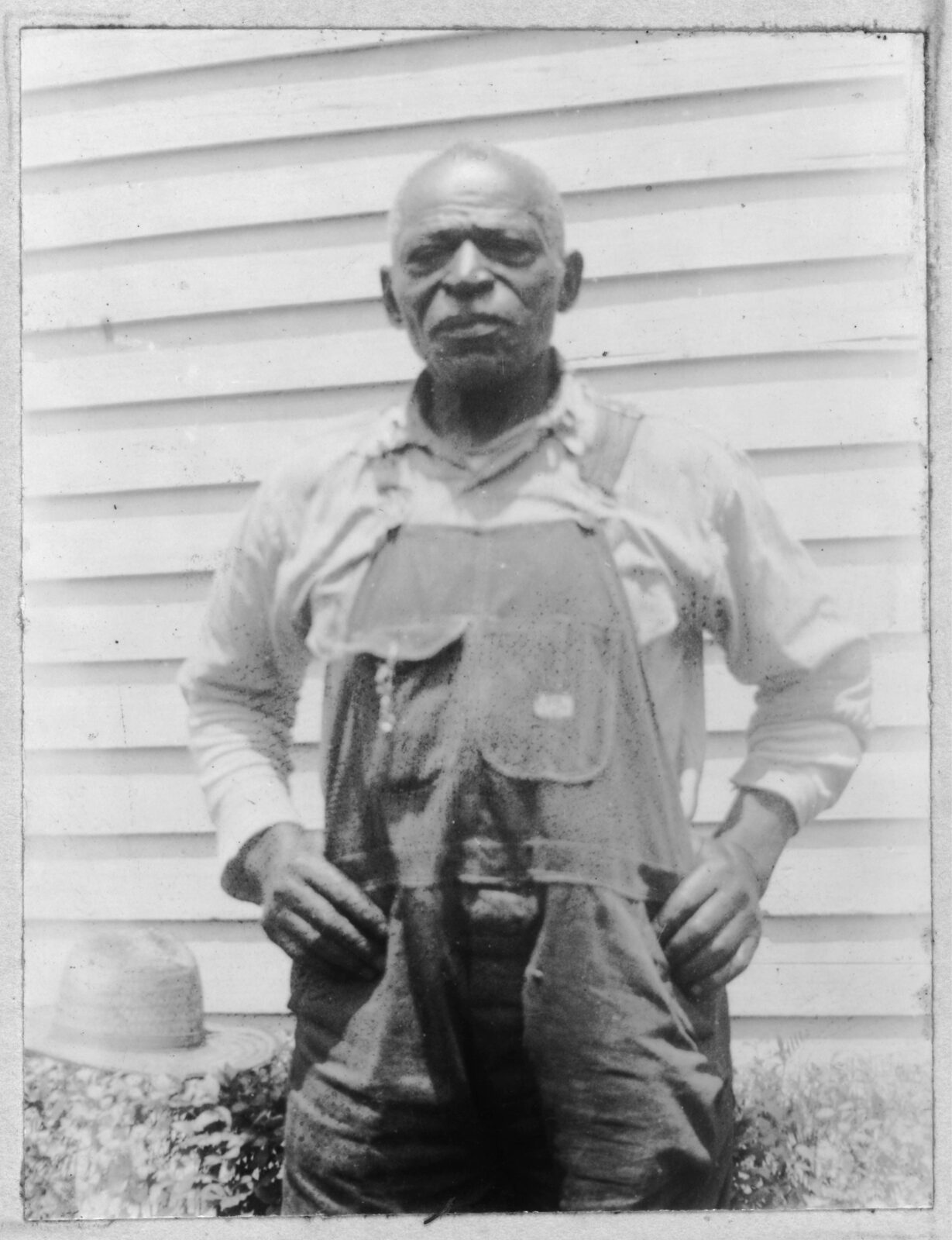
- Born
- 1850; Warrenton, North Carolina
- Interviewed in
- North Carolina
- Age when photographed
- 87
Henry Bobbit
Henry Bobbitt was born in 1850 in Warrenton, North Carolina, one of forty or fifty people enslaved by Richard Bobbitt on 400 acres of tobacco, cotton, corn, wheat and potatoes. His father was named Washington, after George Washington, and his brother Clay, after Henry Clay, "which shows how Massa Dick voted." People worked seven days a week: sunup to sundown six days, and caring for the horses and cleaning on Sundays. Because the mistress was sickly, gatherings were rare, and when they did meet they turned a washpot upside down by the door to muffle the sound.
They were not allowed gardens, chickens or pigs, and took rabbits from other plantations' traps to eat. Having a pencil, paper or slate, or even looking as if you wanted to learn to read, brought a whipping. He was whipped once by the overseer with a cotton stalk for sitting down in the cotton field. He saw a man covered with finger-thick scars from a patroller beating, saw chained groups of people driven to Richmond to be sold, and saw mothers sold from their children at Warrenton amid crying and mourning. He said marriages on the plantation were declared by the couple but limited to five years.
When Sherman's army came, the enslaver paced the floor cursing, and everyone left. Henry walked to Raleigh to find out whether he was really free. His first year of freedom was very hard: he slept in woodsheds, barns and the woods, worked for food, and his clothes were in strings by spring. He expressed the view that Lincoln had freed people without providing for them, and that freedom was the right outcome. He lived in Raleigh when interviewed.
From the Federal Writers' Project slave narratives, 1936–1938. The interviewers wrote down their words in the 1930s, often in dialect spellings that reflect the interviewer more than the speaker.