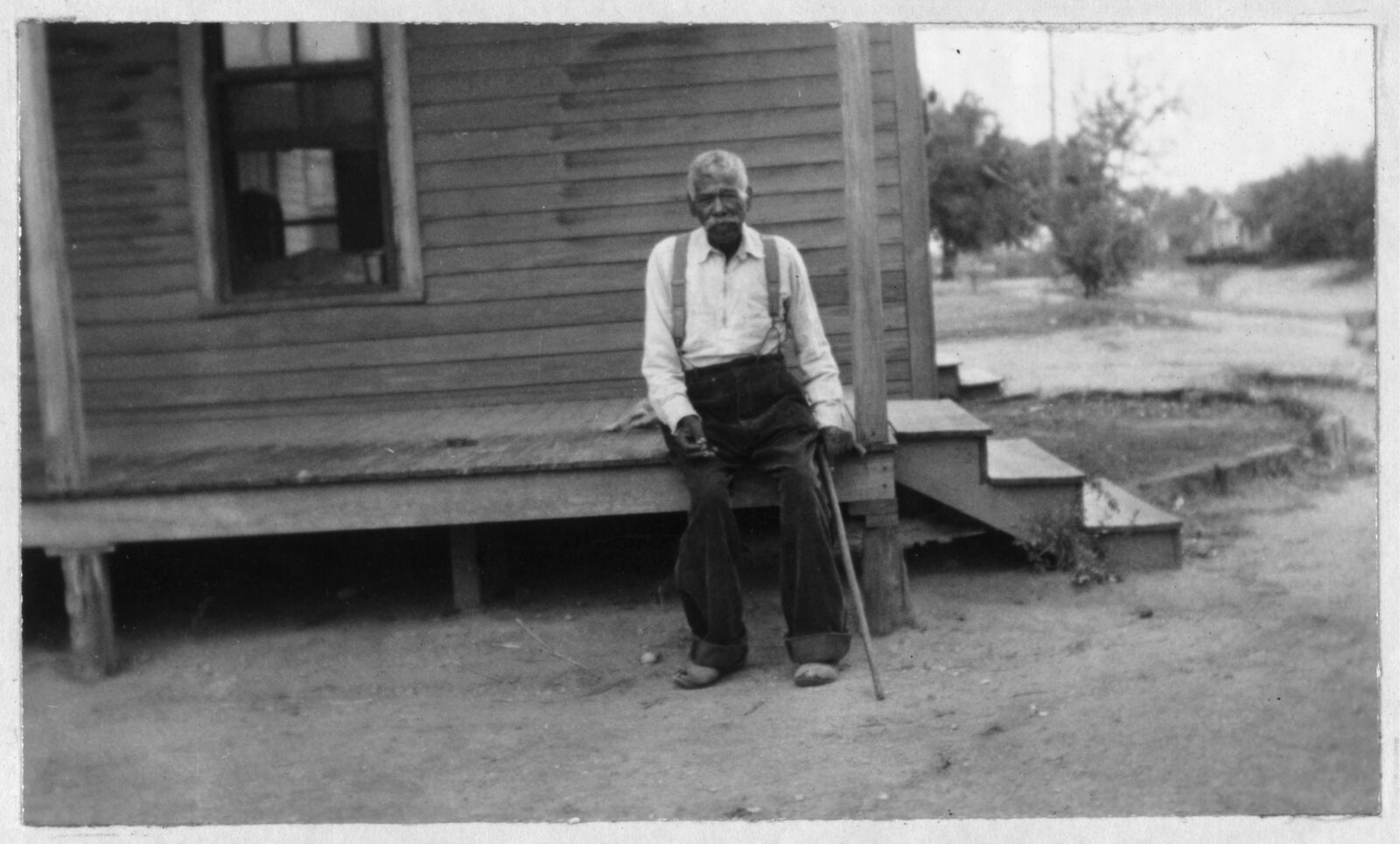
- Born
- About 1854; Texas
- Interviewed in
- Texas
- Age when photographed
- 83
Jack Bess
Jack Bess worked with livestock from early boyhood, on a small Texas ranch with only a few enslaved people. During the war, he said, he heard men talking about conscription for a war that might free the slaves, but it seemed too good to be true, so he kept working his horses and cattle. He said the enslaver whipped people now and then, but not like the slaveholders who used Black drivers, who he had heard were the roughest of all. The cabins had plank or pole floors, the food included possum, coon, beef and pork, and he learned a little reading and writing. At Christmas the fiddling went on all night, and people danced, slept, and got up to dance again.
When freedom came, the enslaver told them they were free. Not knowing what else to do, they stayed about three years, working for small monthly wages. Jack then moved to old Ben Ficklin, four miles south of where San Angelo now stands, back when it was the Tom Green County seat and before San Angelo existed. He worked on ranches in the area for the rest of his working life and never did any other kind of work. In old age, frail and walking with a cane, he lived with a daughter in San Angelo.
From the Federal Writers' Project slave narratives, 1936–1938. The interviewers wrote down their words in the 1930s, often in dialect spellings that reflect the interviewer more than the speaker.