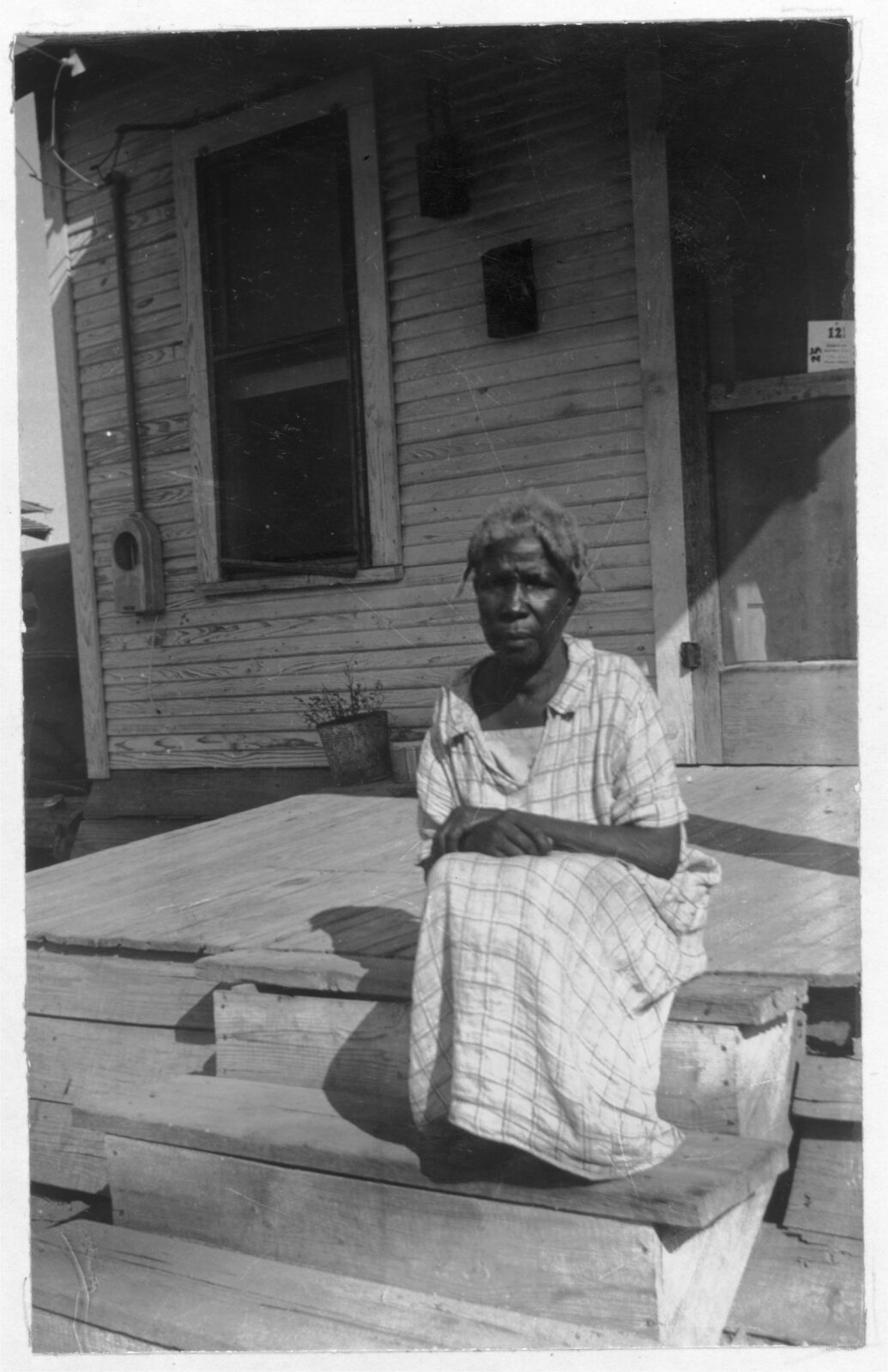
- Interviewed in
- Texas
- Age when photographed
- 87
Jennie Proctor
Jennie Proctor was born into slavery in Alabama. "I's hear tell of dem good slave days," she said, "but I ain't nev'r seen no good times den." Her mother, Lisa, was the cook, and Jennie remembered the driver going cabin to cabin at three in the morning calling her mother to get up and make breakfast. She knew nothing of her father. They lived in pole huts with gaps in the walls and slept on pole scaffolds nailed to the wall.
She cared for children and cleaned the house as a small girl, and at ten was sent to the cotton field. Once, so hungry she couldn't help it, she ate a biscuit she found while cleaning. The mistress beat her over the head with a broom, Jennie fought back, and the driver beat her with a cat-o'-nine-tails until she fell nearly dead, then rubbed salt in the cuts. She carried the scars her whole life, as her grandmother had. The enslaver forbade fishing and hunting; when people secretly cooked a possum at night, he would come to the cabin and take the hindquarters. They never had money or gardens, and on Sundays the children wore gunny sacks while their only clothes were washed.
After the war she stayed with the enslaver's family, not by choice but because, as the interviewer recorded, they had been kept from learning how to make a living. Years later she and her husband, John Proctor, came to Texas in a mule-drawn covered wagon and sharecropped in Leon County near Buffalo until his death. She then moved to San Angelo to live with her son.
From the Federal Writers' Project slave narratives, 1936–1938. The interviewers wrote down their words in the 1930s, often in dialect spellings that reflect the interviewer more than the speaker.