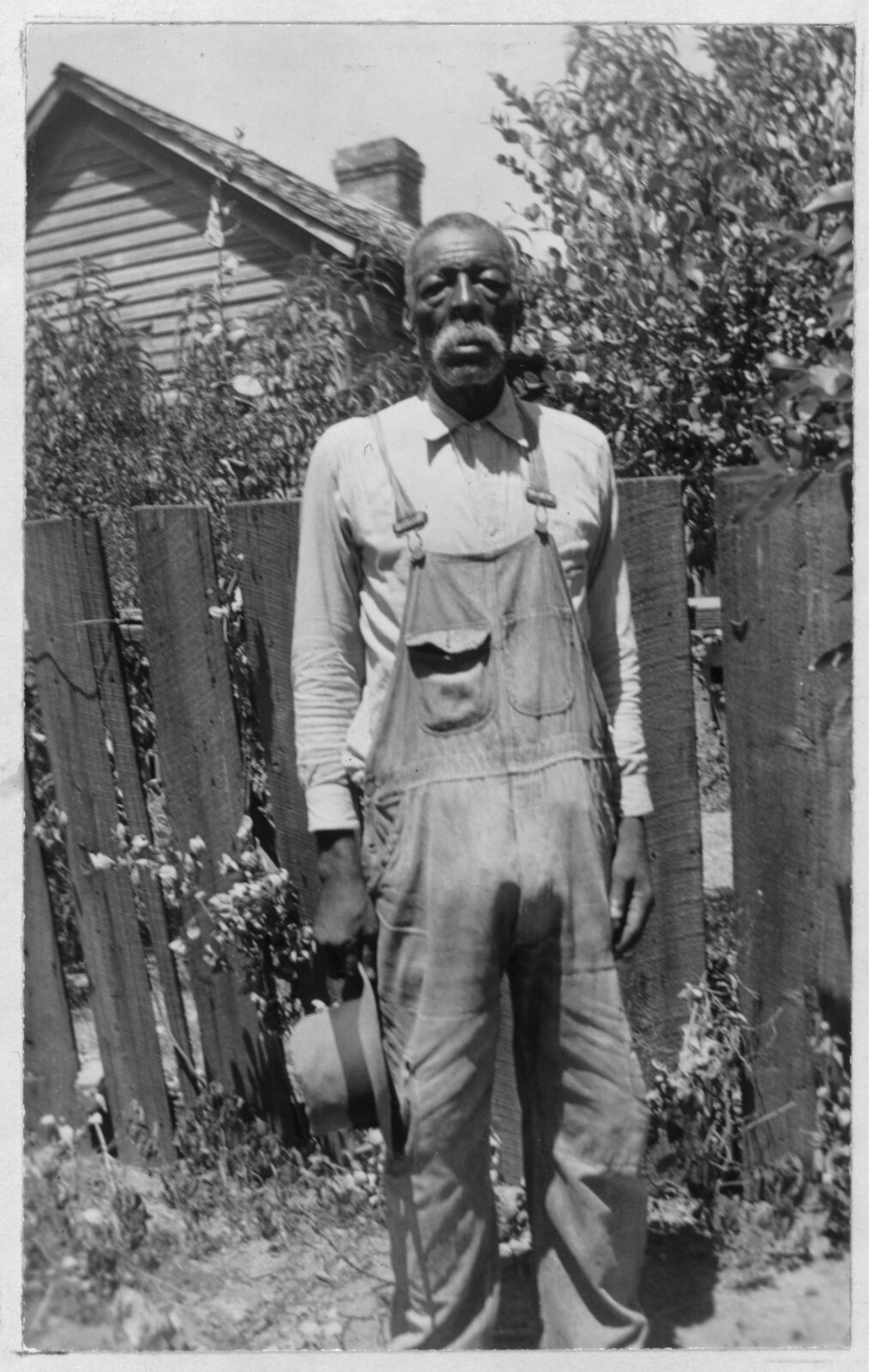
- Born
- Not known; almost grown at freedom
- Interviewed in
- Texas
John Sneed
John Sneed was born on the Sneed place eight miles south of Austin, Texas, to Sarah and Ike Sneed, who had come from Tennessee. He had several brothers, including Dixie, Joe, Jim and Bob, and two sisters, Katy and Lou. They were enslaved by Dr. John Sneed, who practiced medicine from Austin to Lockhart and Gonzales and trained John's mother as a midwife; she became known for nursing pneumonia patients. The plantation had a long log house with sixteen spinning wheels and eight looms, where nearly all the clothing was made, and John's job was turning one of the wheels. Wagon trains of 25 or 30 ox-drawn wagons hauled cotton, corn and wheat to Port Lavaca. Dr. Sneed had no children of his own, and John remembered Christmas trees with presents, birthday cakes for every child, and kissing games.
When freedom was declared, married couples each chose a spring on the property and were given materials to build cabins there, drawing provisions from the big house until Dr. Sneed died. He left something in his will to each person he had enslaved. John's mother received two cows, a pair of horses, a wagon and 70 acres, but after his father died she remarried, and her new husband got her to sign a paper that cost her the land.
John followed cattle until he was about 26 and went up the Chisholm Trail eight or nine times. Once, after riding 24 hours straight during a stampede, he fell asleep under a tree and woke to a panther dragging him by his buckskin coat. He held his breath while it sniffed him, then shot it between the eyes. He later drove freight wagons around Austin. He married Nanny Madeira, and they had six children, five of them living when he was interviewed.
From the Federal Writers' Project slave narratives, 1936–1938. The interviewers wrote down their words in the 1930s, often in dialect spellings that reflect the interviewer more than the speaker.