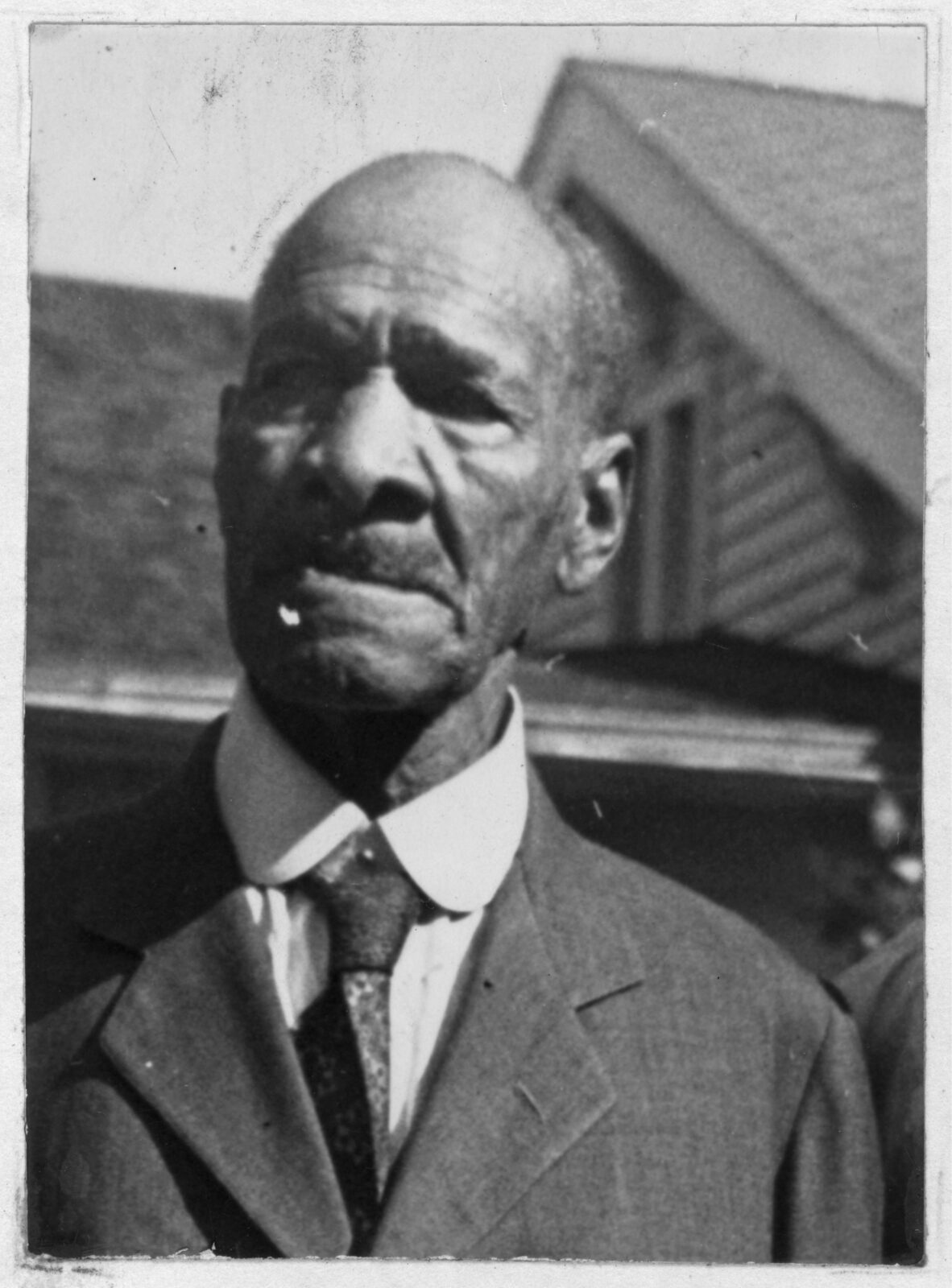
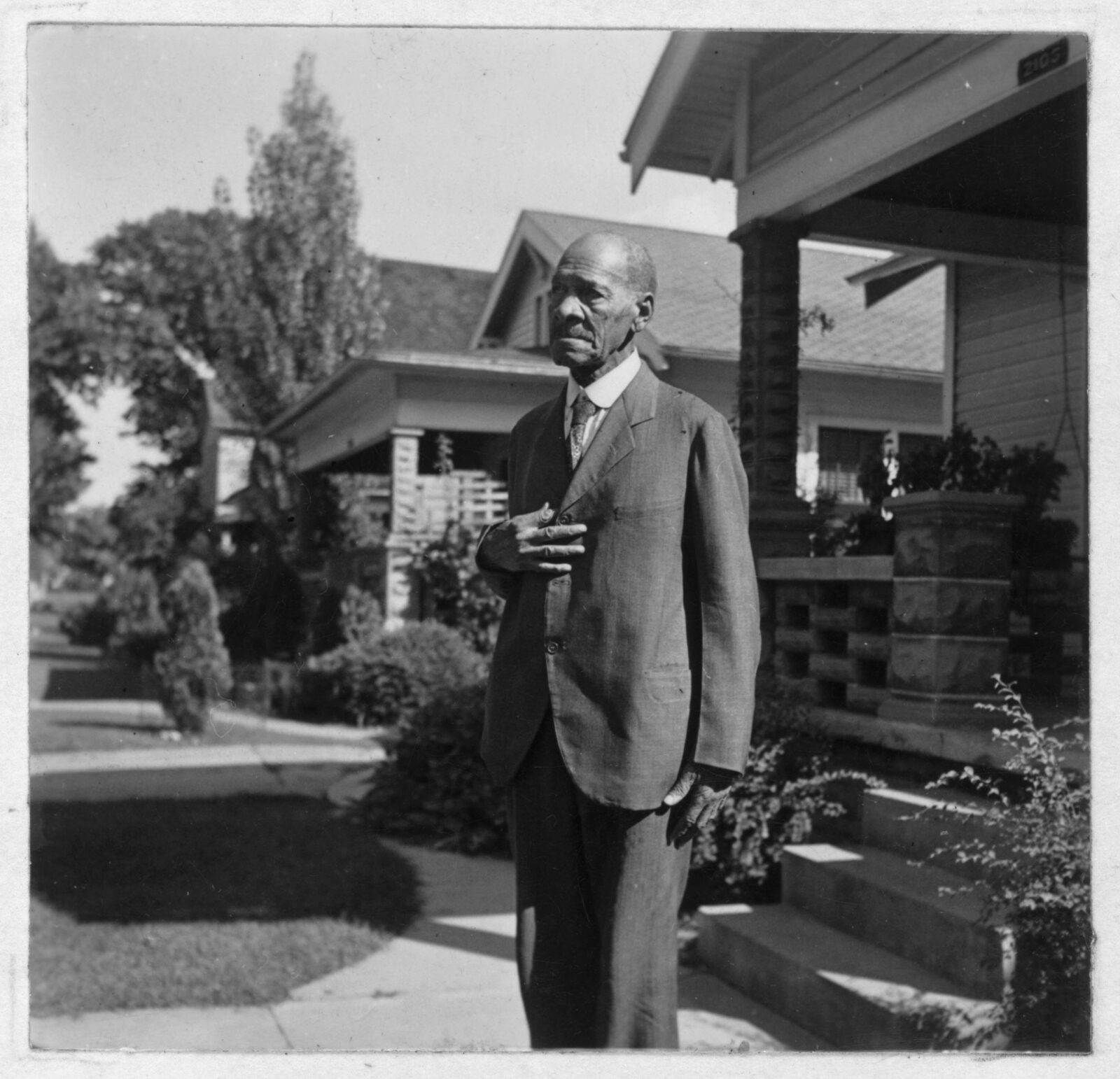
- Born
- March 27, 1848; Owensboro, Kentucky
- Interviewed in
- Indiana
- Age when photographed
- 89
John W. Fields
John W. Fields was born on March 27, 1848, in Owensboro, Kentucky, 115 miles below Louisville, one of twelve children. When he was six the enslaver died, and the estate was divided among the heirs by lottery: three outside men wrote the heirs' names on slips of paper, put them in a hat, and had each enslaved person draw one. "I can't describe the heartbreak and horror of that separation," he said. All twelve children were taken from their mother in one day and scattered to Charleston, Virginia, Lexington and Hartford, Kentucky, and Owensboro. Their mother was later allowed to visit them one week a year. John drew the name of a widowed relative, who lifted him onto her horse with sweet promises, then put him to work the moment they arrived.
He slept on the floor with one blanket and worked from four or five in the morning until dark. He said most enslaved people longed to read and write and seized every chance to learn, though it was harshly punished and white people who taught them could be fined and jailed. "Our ignorance was the greatest hold the South had on us," he said. The widow later married a northern man named David Hill who grew cruel; John was forced to hold a light while Hill whipped a sick woman and then had salt water poured on her back.
Because Kentucky never seceded, he did not learn he was free until 1864. He immediately ran away with his brother to join the Union army; his brother was accepted, but John was turned away as too young at Owensboro, Evansville, Terre Haute and Indianapolis. He found work at seven dollars a month, his first independent job, and worked as a laborer from then on. He married at twenty-four and had four children. At eighty-nine, living in Lafayette, Indiana, he was the last surviving founder of the local Baptist church he had helped organize sixty-four years earlier.
From the Federal Writers' Project slave narratives, 1936–1938. The interviewers wrote down their words in the 1930s, often in dialect spellings that reflect the interviewer more than the speaker.