- Born
- 1850
- Interviewed in
- Texas
- Age when photographed
- 87
Litt Young
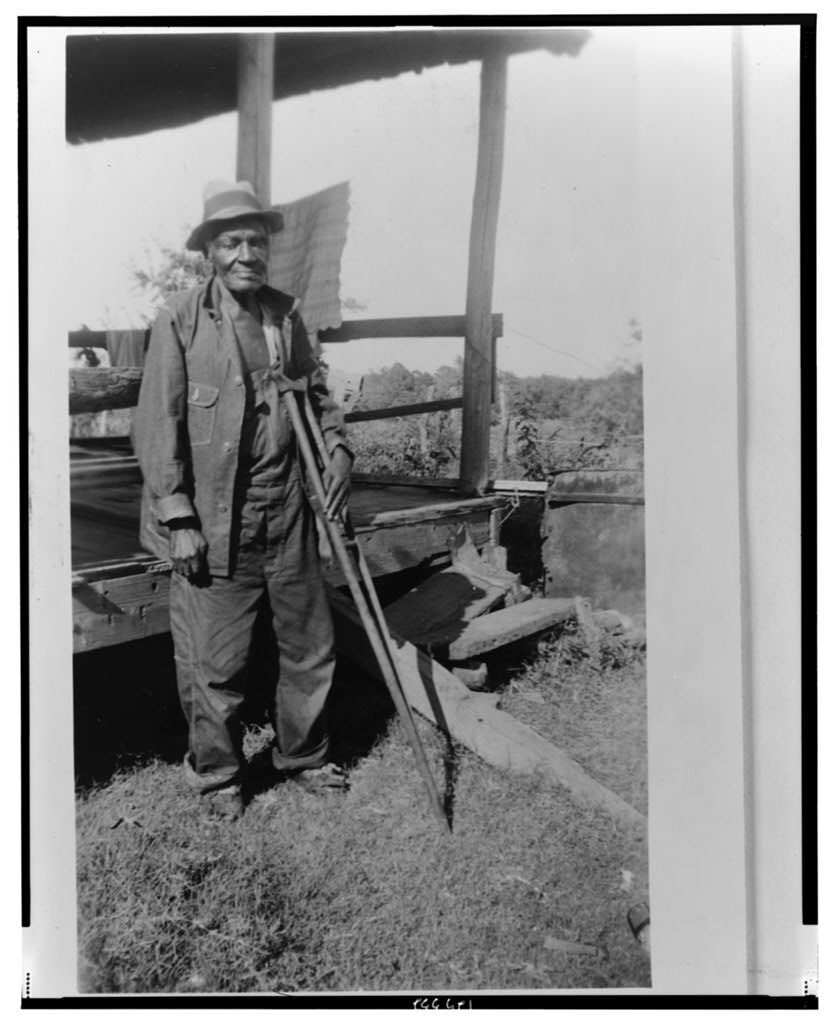
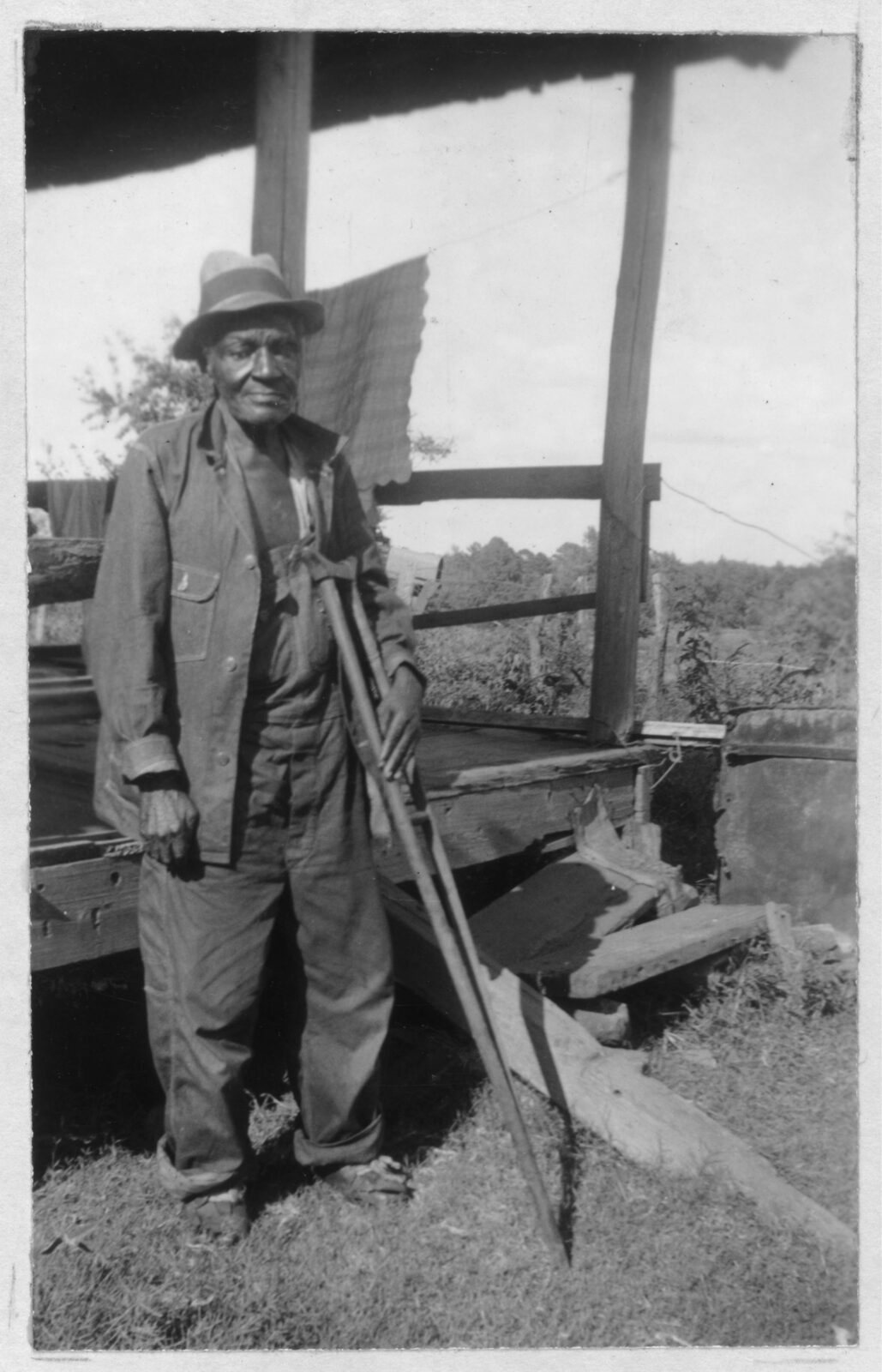
Litt Young was born in 1850 in Vicksburg, Mississippi, enslaved by Martha Gibbs, a wealthy Irish-born woman whose land on Warner Bayou included part of the Vicksburg battlefield. She wore two pistols when she rode out to the place, he said, and could out-curse any man. Litt's father had been bought from a trader in the North; his mother always belonged to the Gibbs family. A sister and two brothers were sold to another family, and he never saw them again. The bell rang at four, the overseer waited with a strap for latecomers, and anyone who failed to pick his 500-pound task was whipped; the last weighing was done by candlelight. Gibbs built a church for the enslaved, where the preacher told them to obey when she was present and preached straight from the Bible when she wasn't.
He saw the Union gunboats arrive, and the townspeople's red flag come down and a white one go up after hours of shelling. After the surrender, Union soldiers held Gibbs under guard for three days and she declared her people free. But while her husband was away buying corn, and Litt's father with him, she seized a group of them and, with armed Irish guards, marched them overland from Vicksburg to Texas, tying the men to trees at night. Near Marshall she made a crop with their labor and freed them only on June 19, 1866. Litt never saw his father again.
He worked as a sawmill hand, tie cutter and woodcutter while the Texas & Pacific Railroad was built from Marshall to Texarkana, then spent nearly all the rest of his working life as a railroad section hand. When interviewed he lived alone on the Powder Mill Road north of Marshall on a $12-a-month pension.
From the Federal Writers' Project slave narratives, 1936–1938. The interviewers wrote down their words in the 1930s, often in dialect spellings that reflect the interviewer more than the speaker.