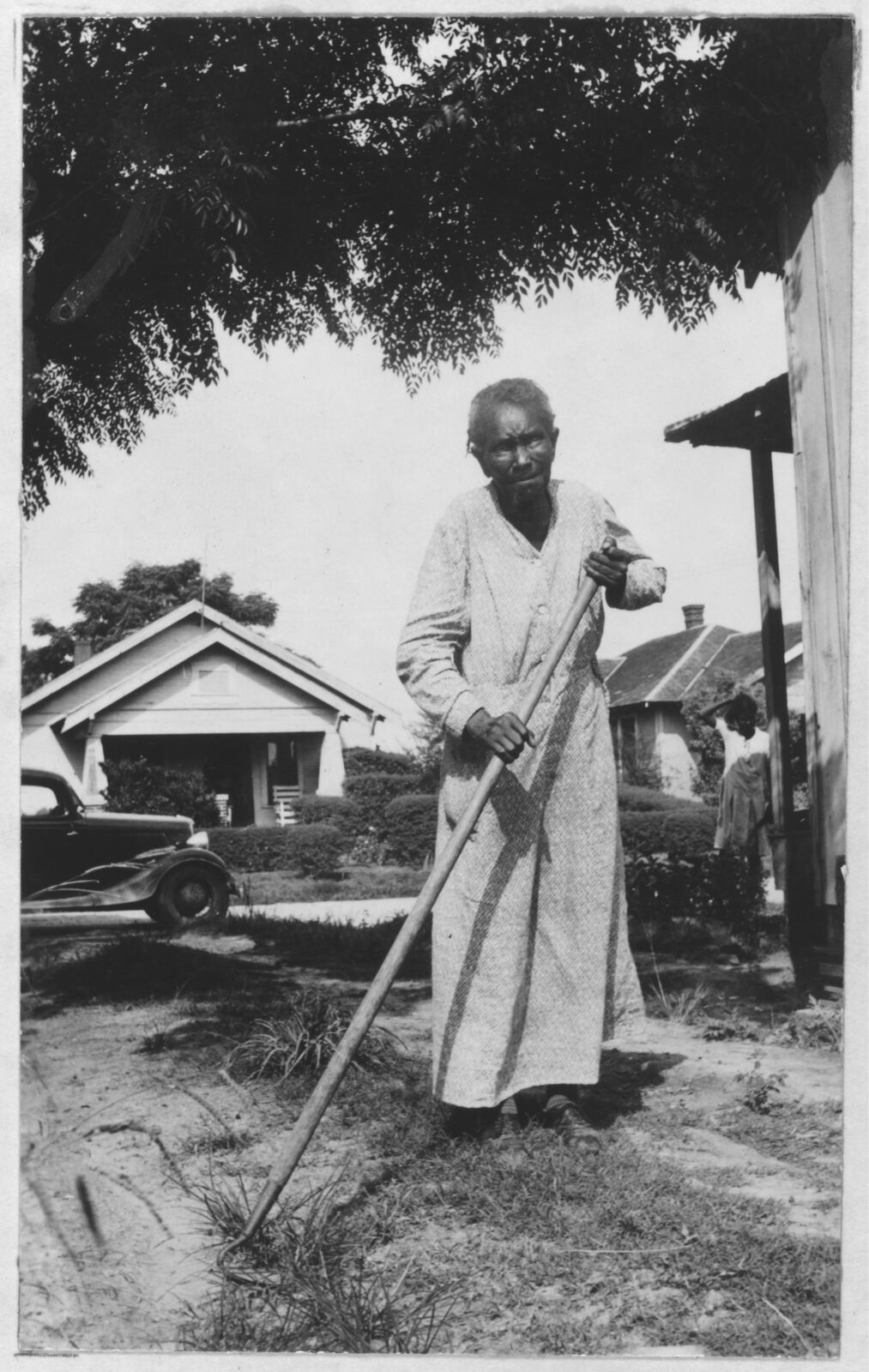
- Born
- About 1848; near Beaumont, Texas
- Interviewed in
- Texas
- Age when photographed
- 89
Lou Turner
Lou Turner was born on the Concord Road near Beaumont, Texas, at a place called Rosedale, and was going on seventeen when freedom came. She spent her whole life within three miles of Beaumont and loved visiting so much that the interviewer had trouble finding her at home. She was enslaved by Richard West and his wife, Mary Guidry, a French woman people called the "Cattle King," who had raised Lou's mother, Maria, from age eleven. Her mother married Sam Marble from Mississippi.
Lou lived in the big house, slept on a trundle bed beside the mistress, and checked that her sheets were as clean as the mistress's. When she pretended to be sick, the mistress, a skilled healer whom neighbors sent for, dosed her with beef-foot oil until she stopped. She built playhouses out of the mistress's gold and silver coins, and the mistress had to borrow from her when she needed money. She went along on visits to the French settlement to play with the grandchildren. She begged to go to school but was always told "some day," and never sat in a school in her life.
She said the enslaver was easy on workers early on, calling them in from the hot sun, but grew harsh as freedom approached, breaking up families and selling people to make his money back. Once, when she was about sixteen and the mistress was away, he tricked her into crawling under the corncrib and then whipped her; the mistress was furious when she found out. The mistress later became a preacher and held services in the hall of the house. Lou remembered the Battle of Atchafalaya shaking all the company dishes off the dresser. After freedom her mother came to take her away, and she wept to leave the woman she had called "Mama," who used to rock her and sing "Oh! Susanna." In old age she lived in her own home with her daughter Sarah.
From the Federal Writers' Project slave narratives, 1936–1938. The interviewers wrote down their words in the 1930s, often in dialect spellings that reflect the interviewer more than the speaker.