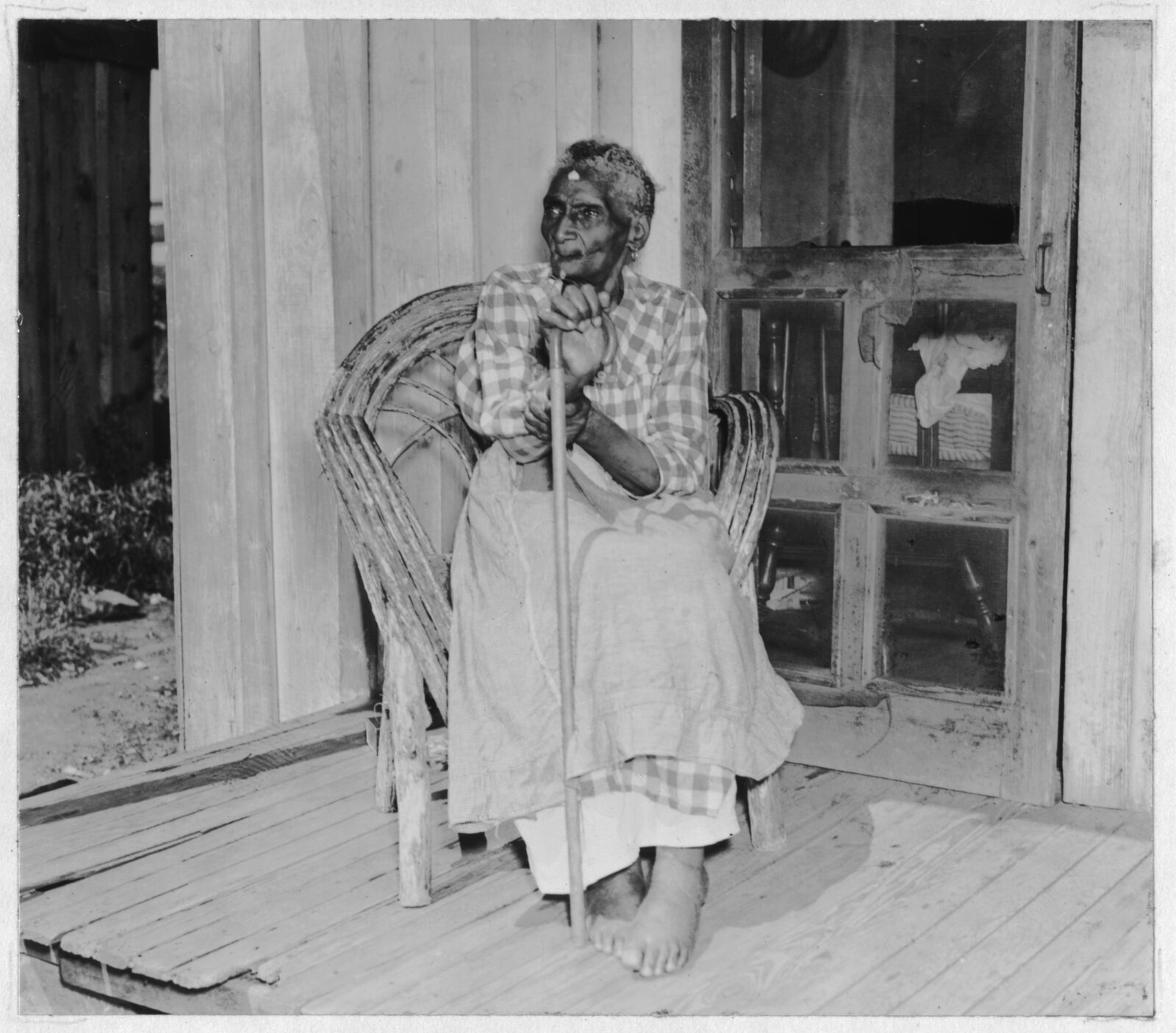
- Interviewed in
- Oklahoma
Biography · formerly enslaved
Lucinda Davis
A biography drawn from Lucinda's own account is being prepared. Their own words are below.
155 160 Walters, William Webb, Mary Frances Wells, Easter White, John Williams, Charley Wilson, Sarah Woods, Tom 312 314 316 322 330 344 354 165 169 Young, Annie 359 ILLUSTRATIONS Facing page Lucinda Davis 53 Anthony Dawson 65 Katie Rowe 275 Charley Williams and Granddaughter 330 Oklahoma Writers1 Project BaySlaves ISAAC APIM? Age 87 yrs. Eulsa, Oklae I was born in Louisiana, way before the War* I ttank it was about ten years before* because I can remember everything so well about the start of the War, and I believe I was about ten years old* My Mammy belonged to Mr* Sack P. Gee, name was, but it maybe was Saxon* I don't know what his real given Anyways we all called him Master Sack. He was a kind of youngish man, and was mighty rich* in England* I think he was born Anyway his pappy was from England, and I think he went back before I was born* Master Sack had a big plantation ten miles north of Arcadia, Louisiana, and his land run ten miles along both sides* He would leave in a "buggy and be gone all day and still not get all over it* There was all kinds of land on it, and he raised cane and oats and wheat and lots of corn and cotton* His cotton fields was the biggest anywheres in that part, and when chopping and picking times come he would get negroes from other people to help out* I never was no good at picking, but I was a terror with a hoe! I was the only child my Mammy had* Master did not own her very long* my pappy belonged* She was just a young girl, and my He got her from Mr* Addison Hilliard, where I think she was going to have me when he got her; anyways I come along pretty soon, and my mammy never was very well afterwards* Master Sack sent her back over to my pappy* Maybe I don't know* Mammy was the house girl at Mr* Sack's because she wasn't very strong…
From the Federal Writers' Project slave narratives, 1936–1938. The interviewers wrote down their words in the 1930s, often in dialect spellings that reflect the interviewer more than the speaker.