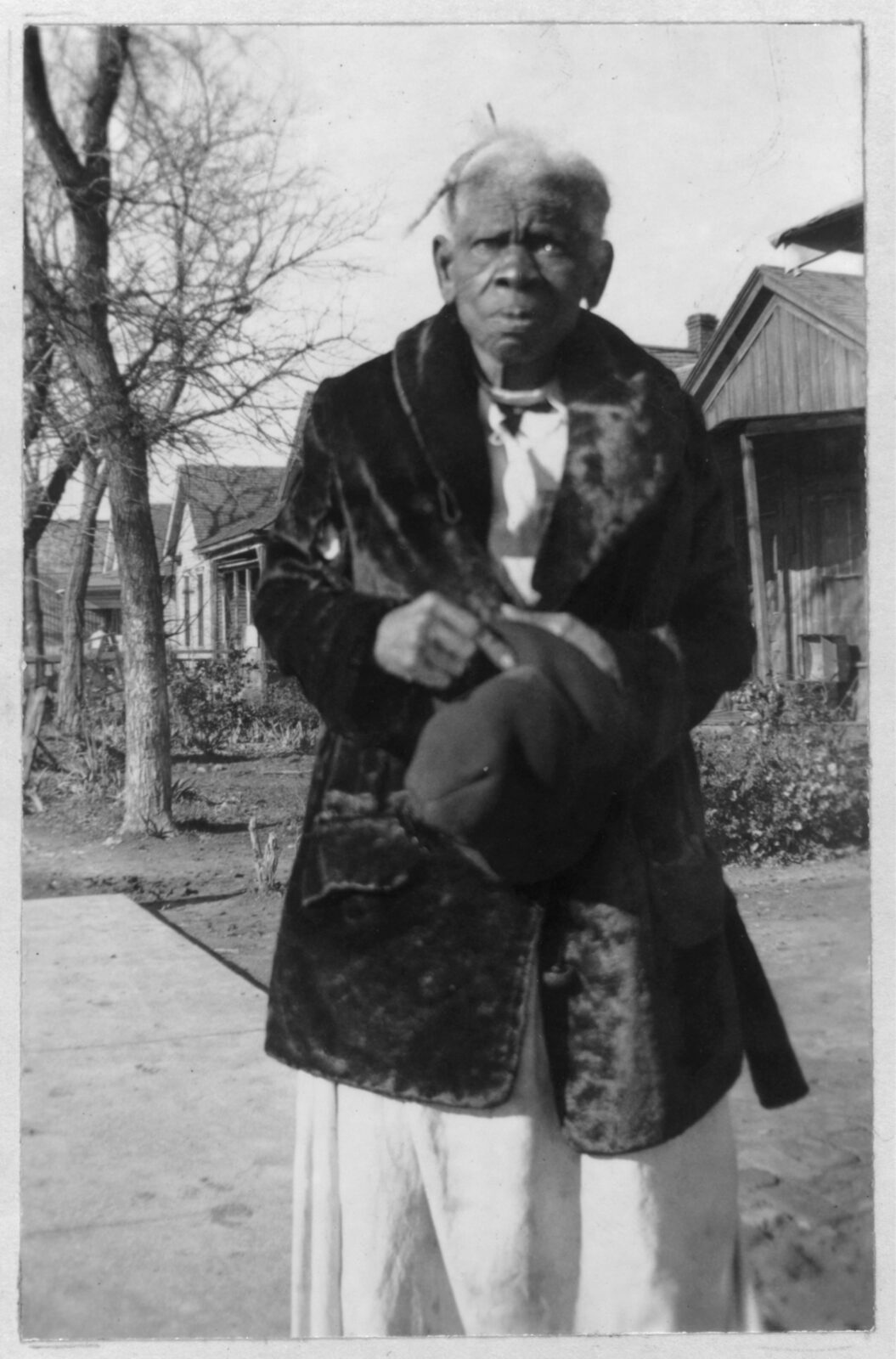
- Born
- Not known; believed she was about 97
- Interviewed in
- Texas
Lulu Wilson
Lulu Wilson was blind and bedridden in her own small home at 1108 Good Street in Dallas when she was interviewed, and she had plenty to say: there was no good in slavery, she said, and "they better not bring it back." She was born near Mammoth Cave in Kentucky, where she played in the cave as a small child. Her father was a free man; her mother, Chloe Ann, was enslaved by Wash Hodges, who had been given her on his marriage. When no more children came after Lulu, the Hodgeses set the dogs on her father and ran him off so her mother would take another husband. Her mother bore nineteen children in all.
As soon as she was able, Lulu was put to spinning cloth for soldiers. She was taken from her mother to sleep by the mistress's bed and worked washing, ironing and milking while still tiny, on a ration of a slice of sowbelly, a bit of bread and a potato. She said the mistress beat her, tied her hands, made her lie on the floor and put snuff in her eyes, and that this was why she went blind. Her mother was a fighter who knocked Hodges down when he came at her with a cowhide and once clubbed a slave-catcher's hound. When Hodges sold her children while she was in the field, her mother would sit down and cry, praying, "Lord, let me see the end of it before I die."
When Lulu was about twelve, the Hodgeses moved everyone to Texas by covered wagon, hiding them in the wagon bed as they passed through a free state. In one town her mother pointed to a man carrying a bucket up some steps and said, "Lulu, that man's your paw." They settled near Chatfield, where Lulu hoed and milked ten cows a day. At about thirteen or fourteen she was married off to a man enslaved by a relative of Hodges, and soon had a baby. After freedom her stepfather walked over half the country gathering up the children who had been sold away.
From the Federal Writers' Project slave narratives, 1936–1938. The interviewers wrote down their words in the 1930s, often in dialect spellings that reflect the interviewer more than the speaker.