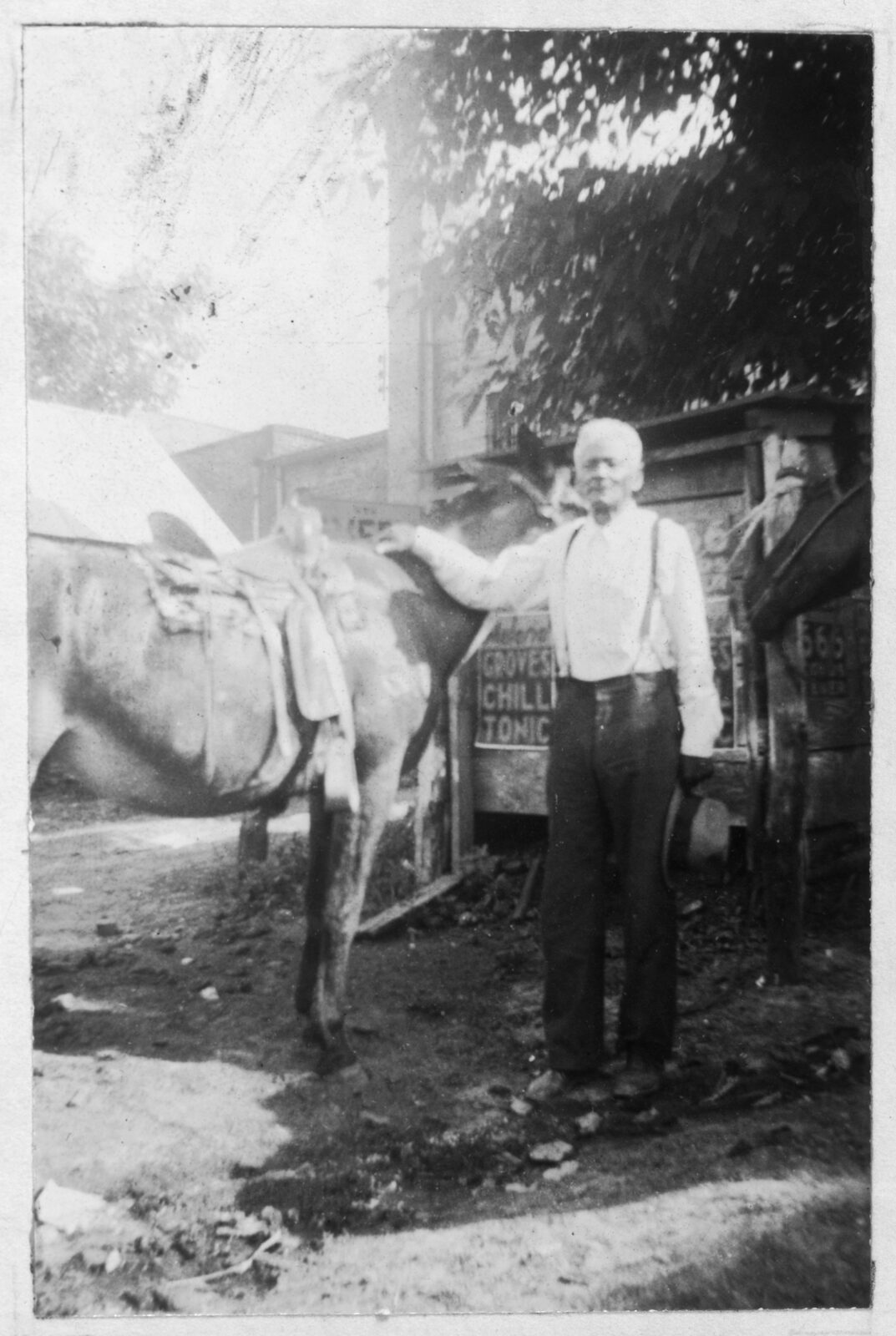
- Born
- Not stated; a small child during slavery
- Interviewed in
- Alabama
Oliver Bell
Oliver Bell was born on the DeGraffenreid place nine miles west of Livingston, Alabama, to Luella and Edmund DeGraffenreid; the family later took the name Bell. He had a brother, Nat, and two sisters, Jestina and Clara. His grandfather Peter was the plantation shoemaker and plow maker, and taught him to pull fodder and chop corn and cotton when he was "just a little scamp." The first thing he remembered was his mother being made to pull her dress down to her waist and lie across the doorway while the enslaver whipped her with a leather strap. He began to cry, and the mistress sent someone to get the boy a biscuit.
His mother was a plow hand who left him all day under a big post oak at the edge of the field: "that tree was my nurse." She said he never learned to walk, he just got up one day and came walking down a cotton row. The tree was still standing, and he wouldn't let anyone cut it down. Weekly rations were a peck of meal, three pounds of meat and half a gallon of molasses. Prayer meetings were held with a washpot turned down at the door to keep the voices in. "A man was growed plumb green," he said, "before he knew the whole world didn't belong to his old master."
After the surrender he watched the corn divided with sharecroppers ear by ear. He also remembered the Klan leader Steve Renfroe riding up to question his father, then riding on and shooting two Black sharecroppers, Enoch and Frank Sledge, at a nearby bridge. Oliver had about sixteen children by two wives, Mandy Powell and Bettie Brown, most of them still living on the same land; many attended Booker T. Washington's school. He wished he could read and write.
From the Federal Writers' Project slave narratives, 1936–1938. The interviewers wrote down their words in the 1930s, often in dialect spellings that reflect the interviewer more than the speaker.