- Interviewed in
- Missouri
Biography · formerly enslaved
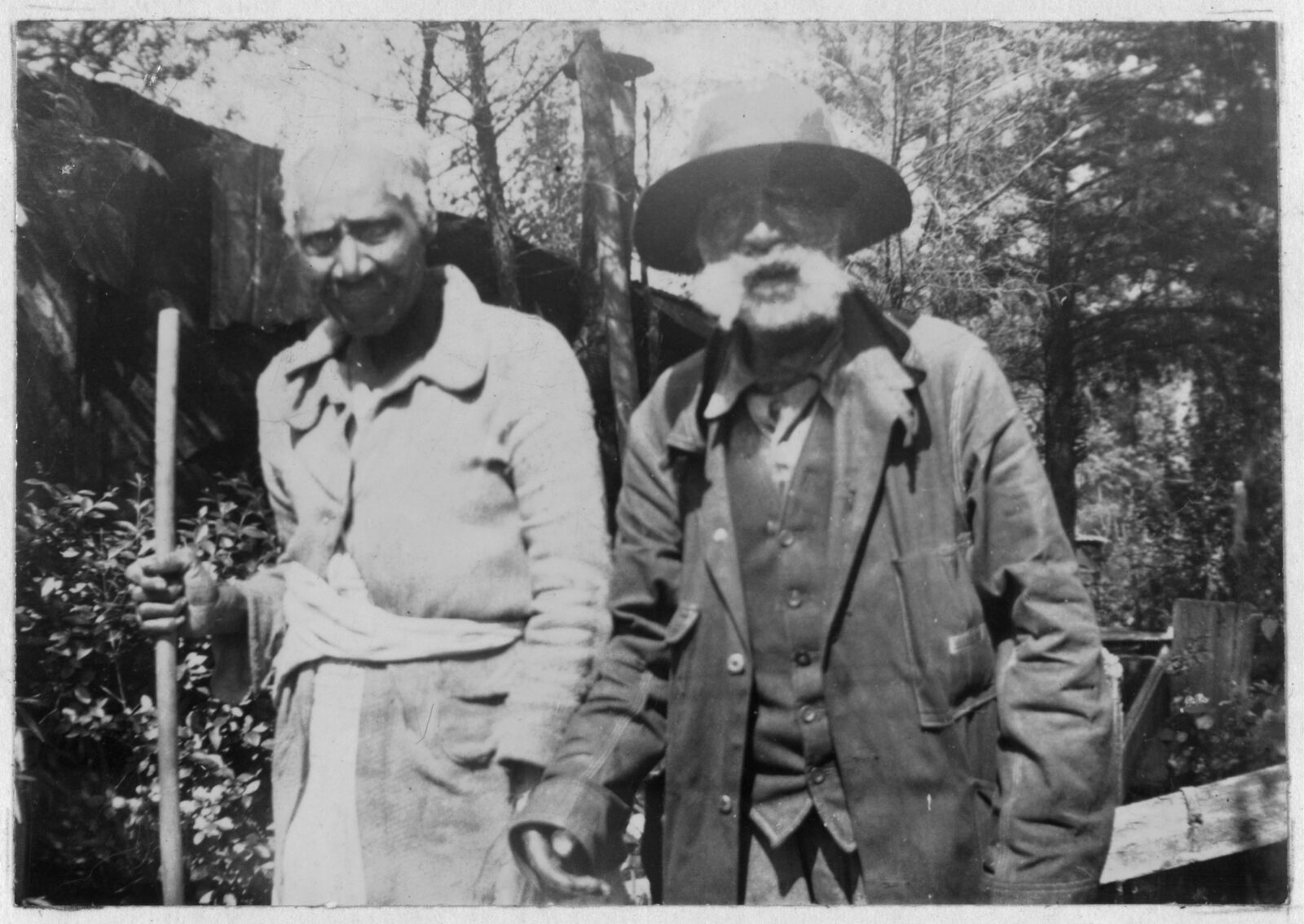
Richard and Drucilla Martin
A biography drawn from Richard's own account is being prepared. Their own words are below.
us bawn May 8, 1835, in Giles County, Tenn. had much bad treatment but we is glad slavery is over." tfe neither one 240C2? RICilARD AKD DRUCILLA MARTIN, CLP TII&3 NEGRO SLAVES. [Reference: 246 Richard and Drucilla martin (A.& B.) (colored (Robinson Street, ^ew "orld, Foplar Bluff, Missouri Called on and talked to Richard and Drucilla Martin, old time (negroes, who were slaves. They talked fluently, really enjoying talk- ing about the 'good days1 as they put it, as they say their master was good to them. nichard is rather short and wears a beard, which is'snow white, [rie claims to be somethiig better than ninety years old, he says about [ninetj'-four or five, and Drucilla is ten years older than Richard. ;? About four or. five years ago., their home which they owned was destroyed by fire, and having no insurance, they have since been living in * |a poor substitute for a house made of pieces of tin, wood, and old boxes, [built under the branches of a tree. .Richard was in a hurry to go to town and see if their old age [pension checks had come yet, ana invited us $,0 . come back some other time. Drucilla said she was the alave of John Pointer. Her mother who was part Indian wore a rin^ in her nose and carried a tomahawk, had ten children, and mothered the ten children of her master/s wife.. Drucilla ;does not remember much about her father, as he was the slave of another family. Although Drucilla does not have any education, she can quote verse after verse from the bicle. -she told some gruesome stories of how some of the masters treated their slaves, ^he said there never was a book printed thatreally told how some, or in fact the majority of the slaves were beaten and wb&peSL $tock. ^o, most masters they were not any more than J &he said some of the young girls were…
From the Federal Writers' Project slave narratives, 1936–1938. The interviewers wrote down their words in the 1930s, often in dialect spellings that reflect the interviewer more than the speaker.