- Interviewed in
- Arkansas
Biography · formerly enslaved
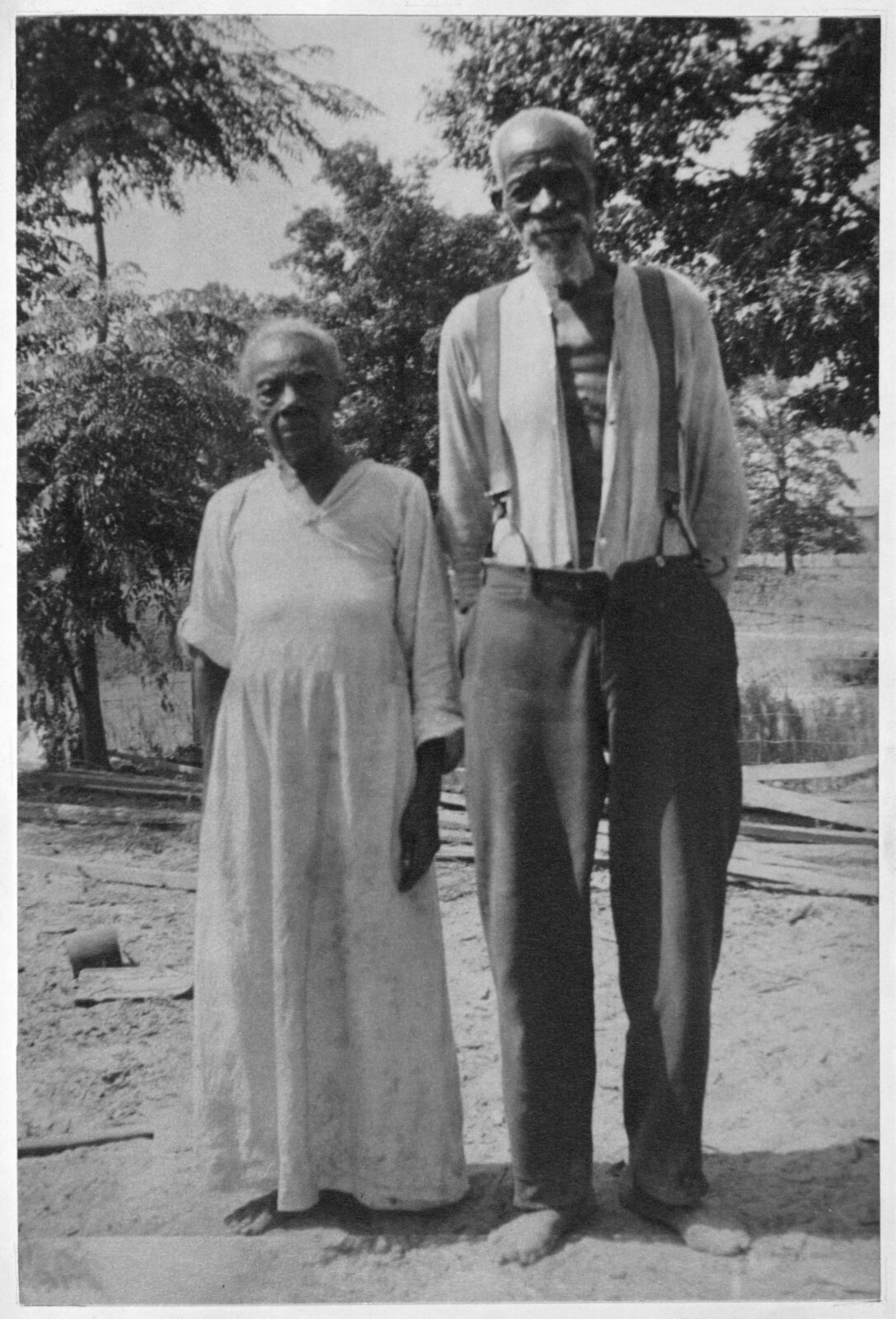
Sarah and Sam Douglas
A biography drawn from Sarah's own account is being prepared. Their own words are below.
214 217 221 223 225 234 235 240,248,250 252 258 262 264 269 276 282 283 286 287 292 296 300 303 305 312 315 319 322 324,326 328 331,333 334,335 336 340 343 344 346 353 ILLUSTRATIONS Facing page Sarah and Sam Douglas 189 Millie Evans 240 *673 S03S5 Interviewer Miss Irene Robertson Person interviewed Age Frank Cannon B.?*D , two miles, Palestine, Arkansas 77 "I was born three miles west of Starkville, Mississippi on a pretty tolerable large farm* My folks was bought from a speculator drove come by* They come from Sanders in South Caflina* Master Charlie Cannon bought a whole drove of us, both my grandparents on both sides* big size farms. He had five farms, Saturday was ration day. "Our master built us a church in our quarters and sont his preacher to preach to us* He was a white preacher* Said he wanted his slaves to be Christians* "I never went to school in my life* I was taught by the fireside to be obedient and not steal* "We et outer trays hewed out of logs* dree of us would eat together * We had wooden spoons the boys made whittling about in cold rainy weather* We all had gourds to drink outer* When we had milk wefd get on our knees and turn up the tray, same way wid pot-liquor* They give the grown up the meat and us pot-liquor* "Pa was a blacksmith* He got a little work from other plantations* The third year of the surrender he bought us a cow* He never went to war* The master was dead* He went in the black jack thickets* old enough to go to war* Pa seemed to like ole master* His sons wasnvt The overseer was white looking like the master but I donvt know if he was white man or nigger* Ole master wouldn11 let him whoop much as he pleased* him off on whooping* Master held 2. When the master come to the quarters us children line up and sit and look at him* Ihen he'd…
From the Federal Writers' Project slave narratives, 1936–1938. The interviewers wrote down their words in the 1930s, often in dialect spellings that reflect the interviewer more than the speaker.