- Born
- Before the war; "a right peart boy at the surrender"
- Interviewed in
- Alabama
Theodore Fontaine Stewart
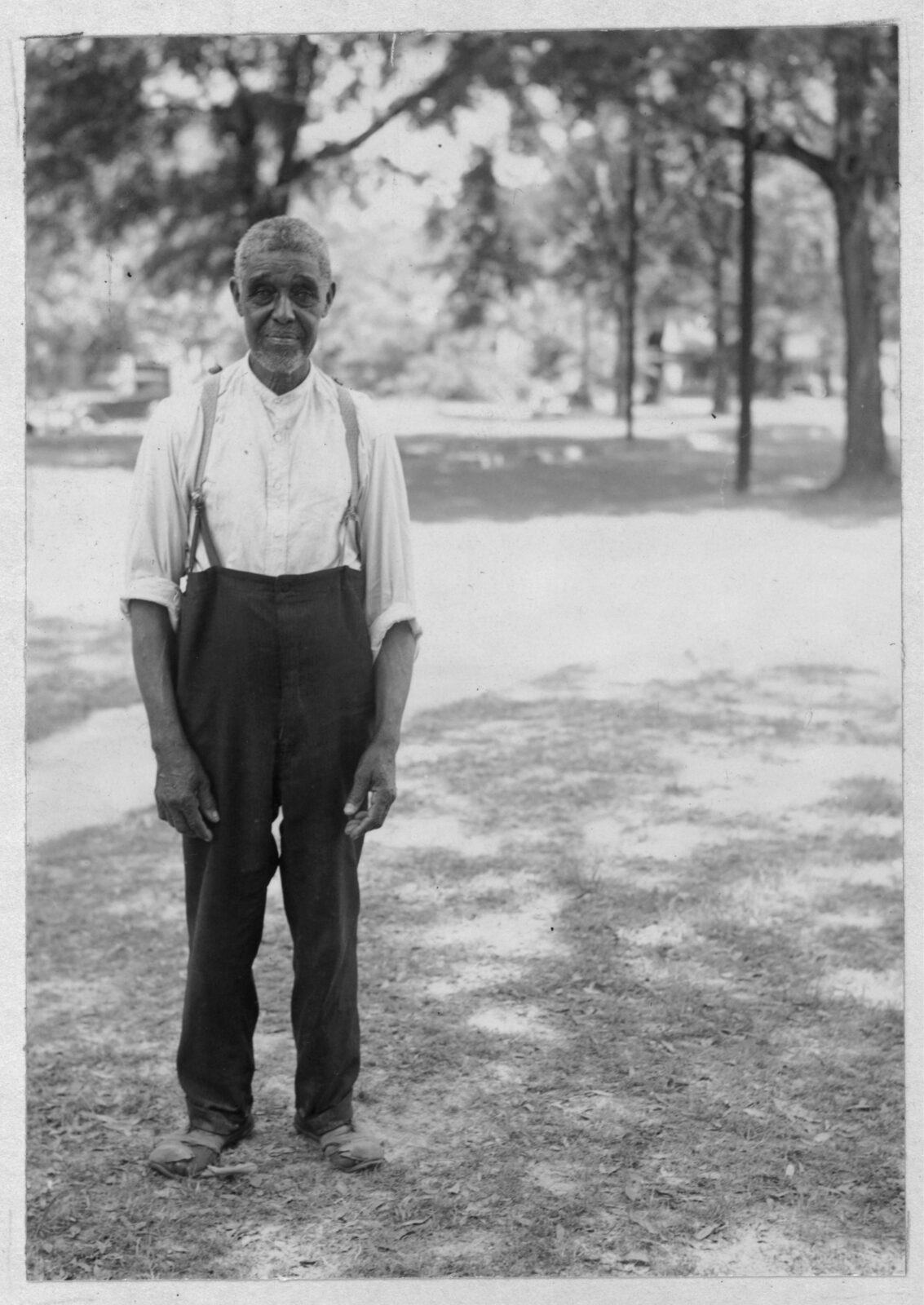
Theodore Fontaine Stewart lived alone in a clean, flower-surrounded one-room shanty in Eufaula, Alabama, tending a small garden at dawn and dusk. He believed he was past ninety, since he was born before the war and was "a right peart boy" at the surrender. His wife, Lottie, had died nearly 22 years earlier. "She done gone on to the promise," he said, "and us gwine walk the golden streets together holding hands."
He was enslaved by Theodore Fontaine, whom he called the richest man in Georgia, with three plantations so large you couldn't see across the smallest field, and his own racetrack where his horses beat all comers. His father was a field hand until the day Fontaine put him on a horse in a race and he won by so far that Fontaine said a man who could ride like that had no business in the field, and made him a stable hand. Too old to fight, Fontaine sent corn, fodder and oats to the Confederate army. When Union troops came, they burned everything but the slave cabins and took the horses and food, and Fontaine had to live in one of the cabins until he could build a smaller house.
From the Federal Writers' Project slave narratives, 1936–1938. The interviewers wrote down their words in the 1930s, often in dialect spellings that reflect the interviewer more than the speaker.