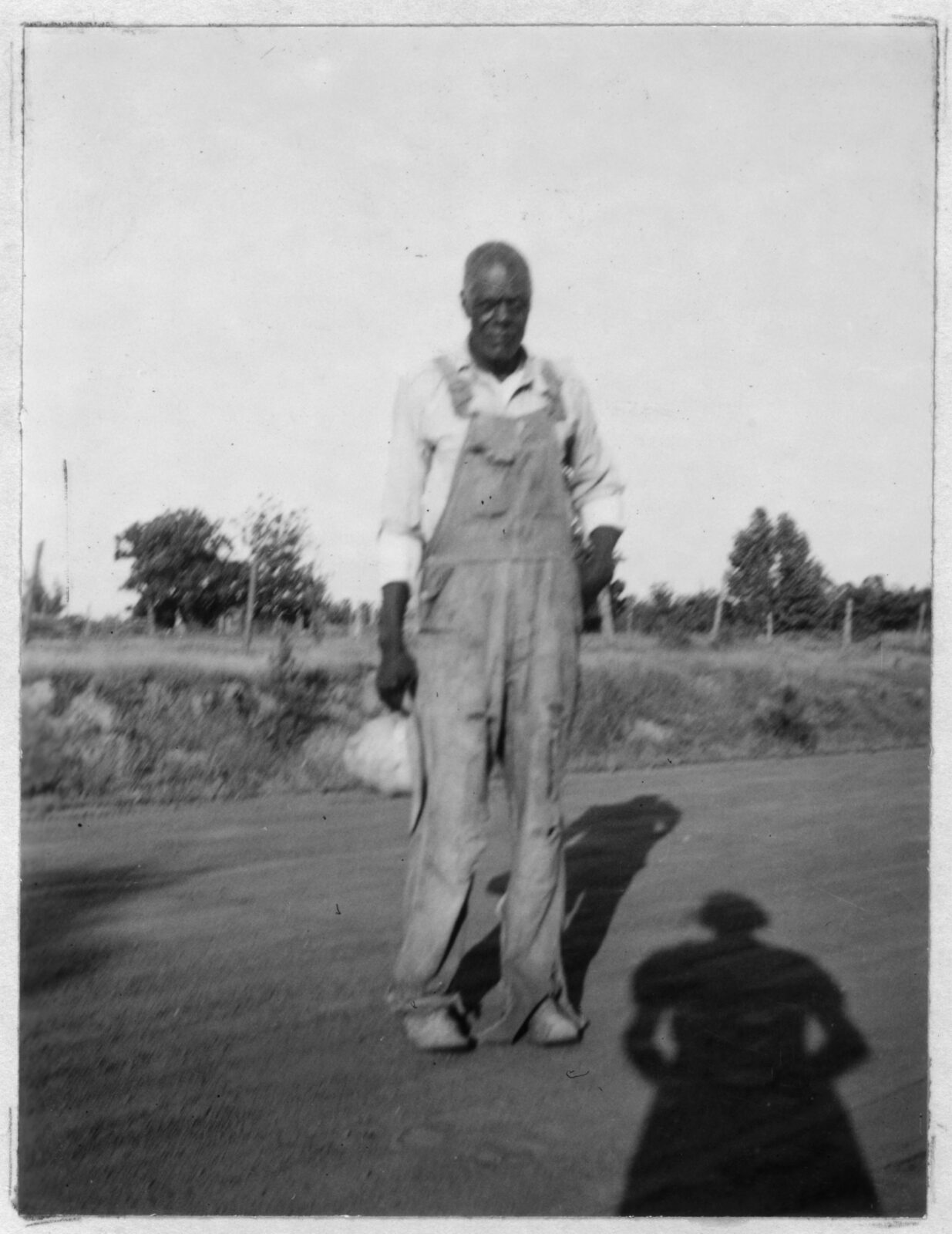
- Interviewed in
- Texas
- Age when photographed
- 93
Biography · formerly enslaved
Wash Ingram
A biography drawn from Wash's own account is being prepared. Their own words are below.
milton 106 Felix Haywood 130 Phoebe Henderson 135 Albert Hill 137 Eliza Holman 148 Bill Homer 153 Scott Hooper 157 Facing page Alice Houston 159 Moses Hursey 169 Charley Hurt 172 Wash Ingram 177 Carter J. Jackson 180 James Jackson 182 Martin Jackson 187 Richard Jackson 195 John James 198 Gus Johnson 208 James D. Johnson 216 Mary Ellen Johnson 223 Pauline Johnson and Felice Boudreaux 225 Spence Johnson 228 Harriet Jones 251 Harriet Jones with Daughter and Granddaughter 231 Lewis Jones 237 Lizzie Jones 246 Sam Kilgore 255 Ben Kinchlow 260 Mary Kindred 285 420*385 Si-SUlVE ST0SI2S (fexas) Page One > flLUS EASTER, 35, was bora near Nacog&oches, Texas, He does not know the name of his first master, Frank Sparks brou^it Willis to Bosqueville, Texas, when he was two years old. Willis believes firmly in Hconjure^ient, and ghosts, and wears several charms for protection against the former. He lives in Waco, Texas, "1*8 birthed below Nacogdoches, and dey tells me it am on March 19th, in 1852. My mammy had some kind of pgper what say dat. But I donft know my master, Marse Frank Sparks f cause when I*s two he done give me to and he brung me to Bosqueville, Dat sizeable place My maamy come fbout a month after, 'cause Marse Prank, he s y dem days. I1 s too much trouble without my mammy. tt Mammy de bes1 cook in de county and a master hand at spinninr and weaving She made her own dye* Walnut and elm makes red dye and walnut brown color, and shumake makes black color. When you wants yallow color, git cedar moss out de brake* W A11 de lint was picked by hand on our place. It a slow job to git dat lint out de cotton and Ifs gone to sleep many a night, settin1 by de fire, pickin* lint. In bad weather us sot by de fire and pick lint and patch harness and shoes, or whittle out something…
From the Federal Writers' Project slave narratives, 1936–1938. The interviewers wrote down their words in the 1930s, often in dialect spellings that reflect the interviewer more than the speaker.