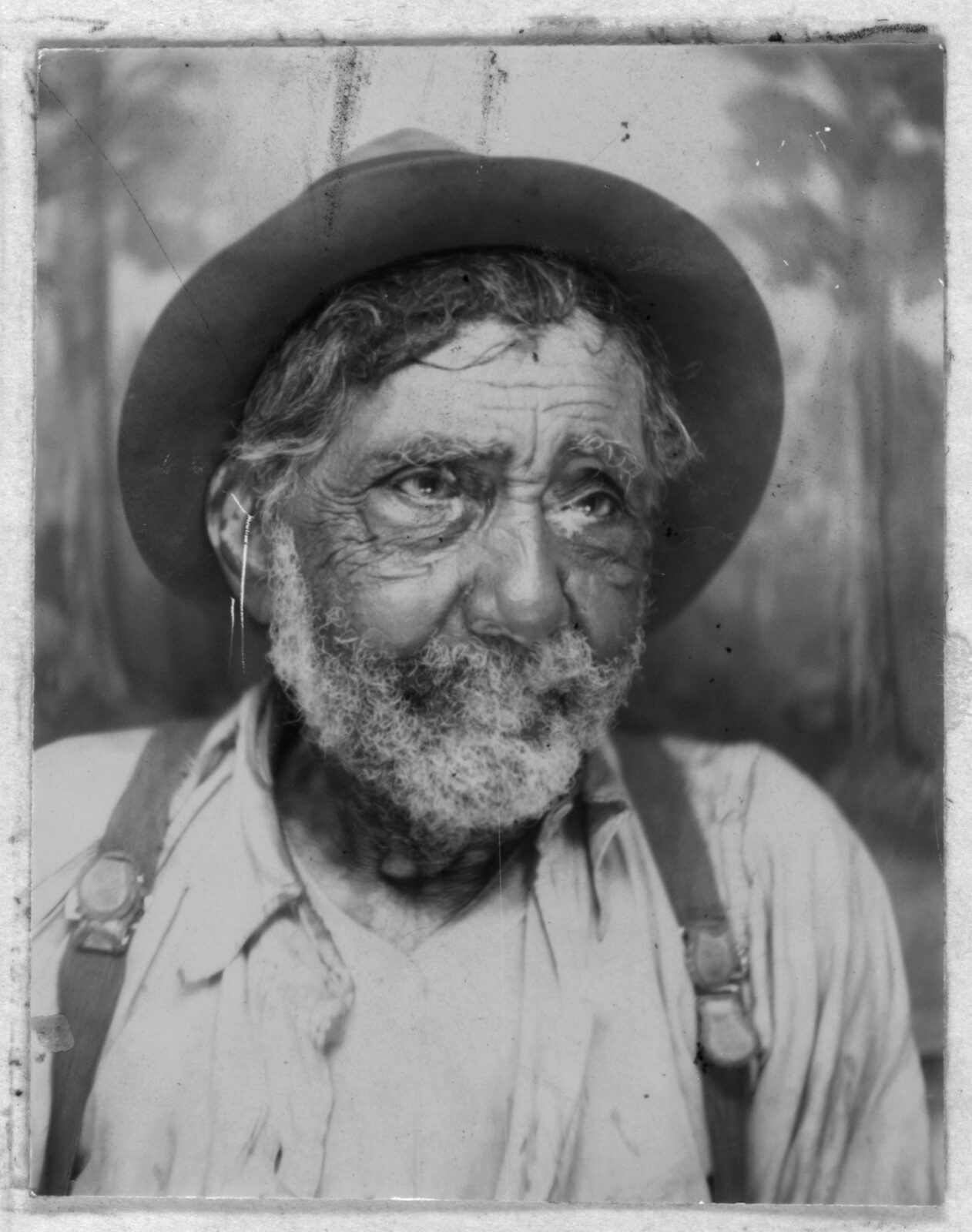
- Born
- December 7, 1854; Tuscumbia, Alabama
- Interviewed in
- Alabama
- Age when photographed
- 83
William Henry Towns
William Henry "Bill" Towns was born on December 7, 1854, in Tuscumbia, Alabama, and was about seven when the Civil War began. His mother, Jane Smoots, came from Baltimore, and his father, Joe Towns, from Huntsville. During slavery his father was sold to another enslaver. After the war his mother married Frank Jones, so of his seven siblings only he and his sister Nelie were Townses; the rest were Joneses.
He said the enslaver, a Mr. Young, did not whip people or let anyone else do it, fed them the same food his own family ate, and once told off a neighbor who complained he was too easy on them. Across the road, by contrast, the quarters had a picket fence to keep people from running away. Bill's job as a child was minding the gaps in the fences to keep cattle out of the crops. He loved the old folks' stories, including ones that frightened him too much to walk alone through the house at night, and he remembered riddles and songs from an old man named Caleb. Caleb, who came from New Orleans, told of shiploads of enslaved people unloaded there in chains and sold to the highest bidder.
He said the enslaved were forbidden to read, and even being caught looking at the pictures in a book was treated like a crime. They attended the white church in the evening after the white congregation, where, he said, white people read the Bible for the preacher so that nothing would be said that might help people get free. He reflected that some enslavers deliberately overworked people so they could whip them, to keep them cowed and stop them from fighting for their freedom sooner. Of Lincoln he said that whatever his motives, "he sho' done a big thing."
From the Federal Writers' Project slave narratives, 1936–1938. The interviewers wrote down their words in the 1930s, often in dialect spellings that reflect the interviewer more than the speaker.