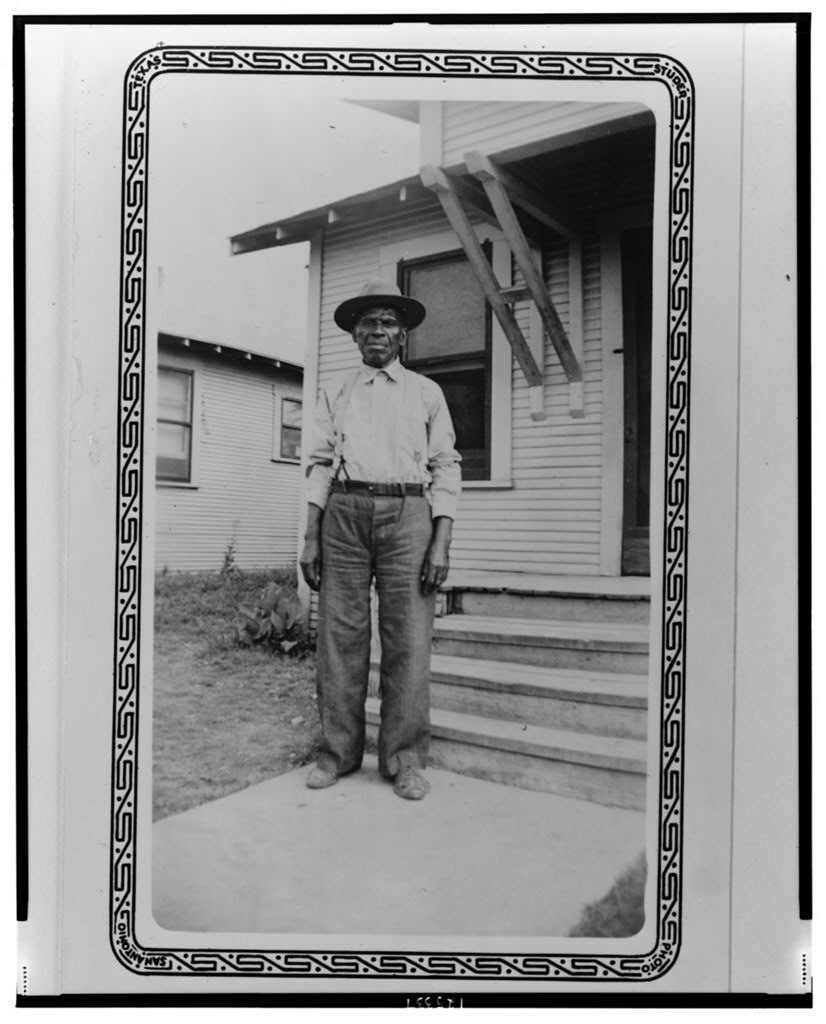
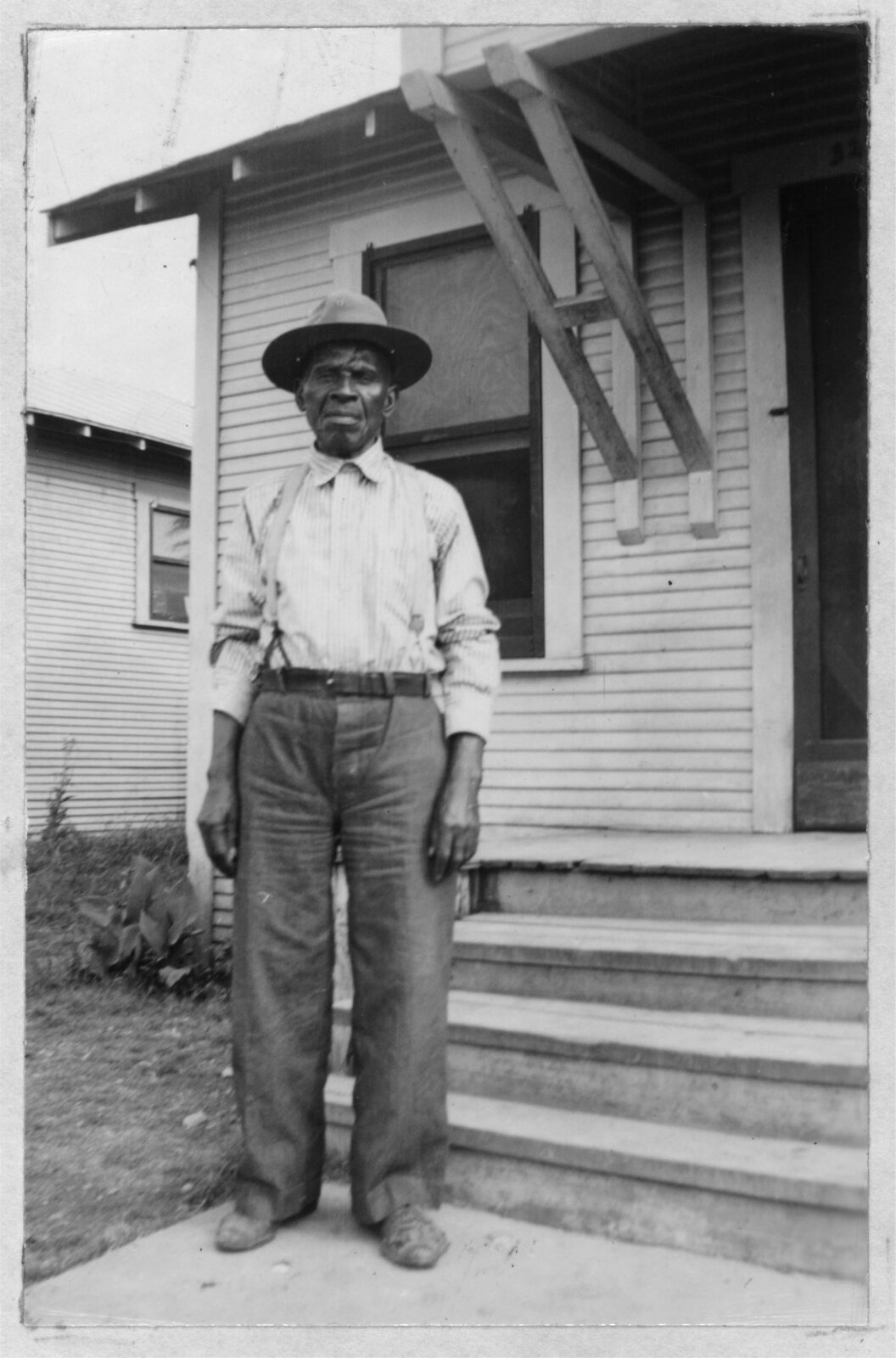
- Born
- 1850; Charlotte County, Virginia
- Interviewed in
- Texas
- Age when photographed
- 87
William Watkins
William Watkins was born in 1850 to Julia and Hudson Watkins on the Watkins tobacco plantation in Charlotte County, Virginia. The enslaver, whom William called "Tobacco" Watkins, also owned a tobacco factory in Richmond. The plantation covered about 400 acres, with 100 in tobacco and the rest in barley, wheat, oats, and livestock. The enslaved families lived in log cabins and built their own church in the woods. The overseer whipped everyone.
Every year slave traders came, and some people were sold "down the river" to New Orleans, walking behind the traders' ox carts. William married on the plantation. When Union troops arrived, he said, they came "thick as leaves" and burned the big house and the cabins. Freed with no home and nothing to eat, the family worked on shares, and soon met the Ku Klux Klan, which whipped freed people who left the plantations.
Around 1870 he enlisted in the U.S. Army at Jefferson Barracks and was sent to Texas, serving as one of the Black soldiers later known as Buffalo Soldiers. He stood guard at the Alamo in San Antonio and served at Fort Davis, Fort Concho, and Fort Clark. He took part in a night march to Presidio to free a man from a Mexican jail, fought Apaches, and was shot through the wrist by an arrow in a battle with the Cheyenne in Indian Territory. He showed the scar to his interviewer. He said a sergeant who disliked him brought false charges and that he was given a dishonorable discharge with no trial, which cost him his pension. In old age he lived in Texas with William Branch, a fellow veteran from Virginia who had served in the same campaigns.
From the Federal Writers' Project slave narratives, 1936–1938. The interviewers wrote down their words in the 1930s, often in dialect spellings that reflect the interviewer more than the speaker.