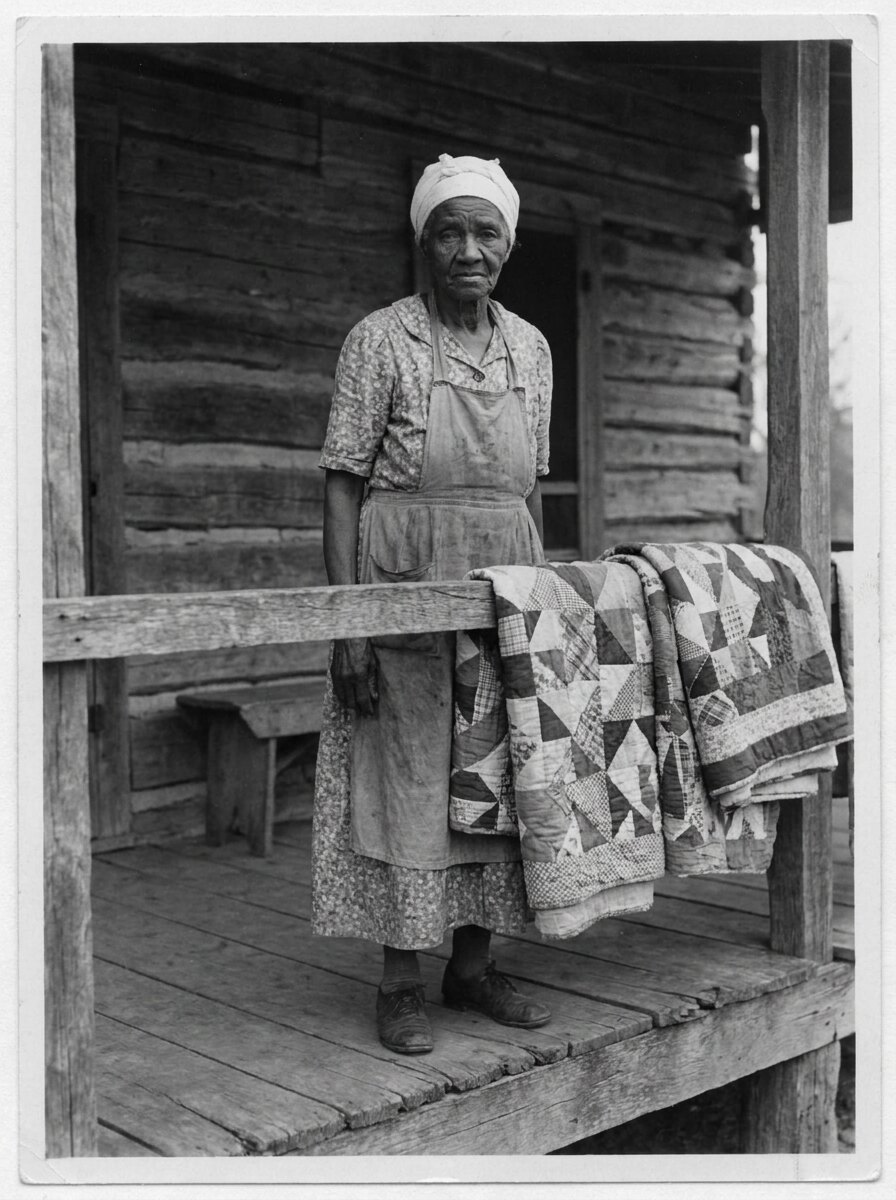
Portrait: artist's interpretation. No photograph of Alice Gaston is known.
Alice Gaston
Recorded in Gee's Bend, Alabama, 1941
Their Story
Alice Gaston's brief recording centers on a memory from the Civil War. She remembered Union soldiers coming through and her father leaving with them, taking two of her sisters and her oldest brother but leaving her behind. Her mistress ran to hide from the soldiers and told the children not to say where the family was; when the soldiers asked, she told them she did not know. Her mistress and master are identified in the transcript only by initials.
She said her owners treated her well and taught her a rule she still lived by: "Don't steal, don't lie, and if you want anything, ask for it." After they died, she moved to the place of a man identified as Mr. Y. and stayed until he and his wife died, then moved on to where she lived when recorded.
She said the government had moved her out of an old house into a good one and gave her food and clothing, and that she could find no fault with how she was treated. She was recorded by Robert Sonkin in Gee's Bend, Alabama, in 1941.
The Recordings & Transcripts
The recording Gee's Bend, Alabama, 1941
Captions open at the bottom of the screen when you press play. Click any transcript line to jump to it.
Transcript
Alice GastonWe was talking about in the old war time, the old slavery time. I can remember when, uh, I can remember when the Yankees come through and, uh, they carried my father away and carried away, my si, two sisters and one brother. And, uh, they left me. And I can remember when my missus used to run in the garden, from the Yankees and tell us if they come, don't tell them where they at. Told, don't tell nobody where they at when they come and they all come and they told me, don't get scared now and tell them, where they is, where they is. I told them no, we told them no. And uh, when they come and ask for them I told them I didn't know there they was, and they was in the woods. And this was at the house. And my father, when my father left, he carried with the, he went away with the Yankees, and carried two, carried two, two girls and one son, the oldest one. Carried them with him. And he with the Yankees. And I can remember that. And uh, my old missus was named Mrs. M., and the master was name Mr. F. I. [pause] Mr. F. I
Robert Sonkin:They treat you pretty good?
Alice Gaston:Yes sir, they treat me nice. They treat me nice as they could treat me. And then after they left, after they died, then I heard, still here and am here until yet. And the white folks all been treating me mighty nice ever since they knowed me. They treating me all now, that knows me, they treating me nice. I's came up here over here from Mr. Y., from over to [unintelligible] and come to Mr. Y.'s place up here. And he kept me there until he, he died, him and his wife. And then I come on then from that, on down here, and I'm here yet. An' they all treating me mighty nice, all the white folks that know me, they treats me nice. And if I want anything, I'll ask for it. I was taught in that a way by my old master. Don't steal, don't lie, and if you want anything, ask for it. Be honest in what you get. That was what I was raised up with. And I'm that a way today.
Robert SonkinWhat's the government been doing for you here?
Alice GastonThey been treating me fine. Ever since I been, ever since I been here with the government they treat me nice. I was in a old house down there, took me out the old house and put me up there in a good house where they could take care of me. And I'm in there yet. I don't find no fault. Give me enough food to eat, give me clothes to wear. They been treating me just as nice as they can. I can't find no fault.
Robert SonkinPretty, pretty happy then.
Alice GastonYes sir, yeh.
END OF SIDE B
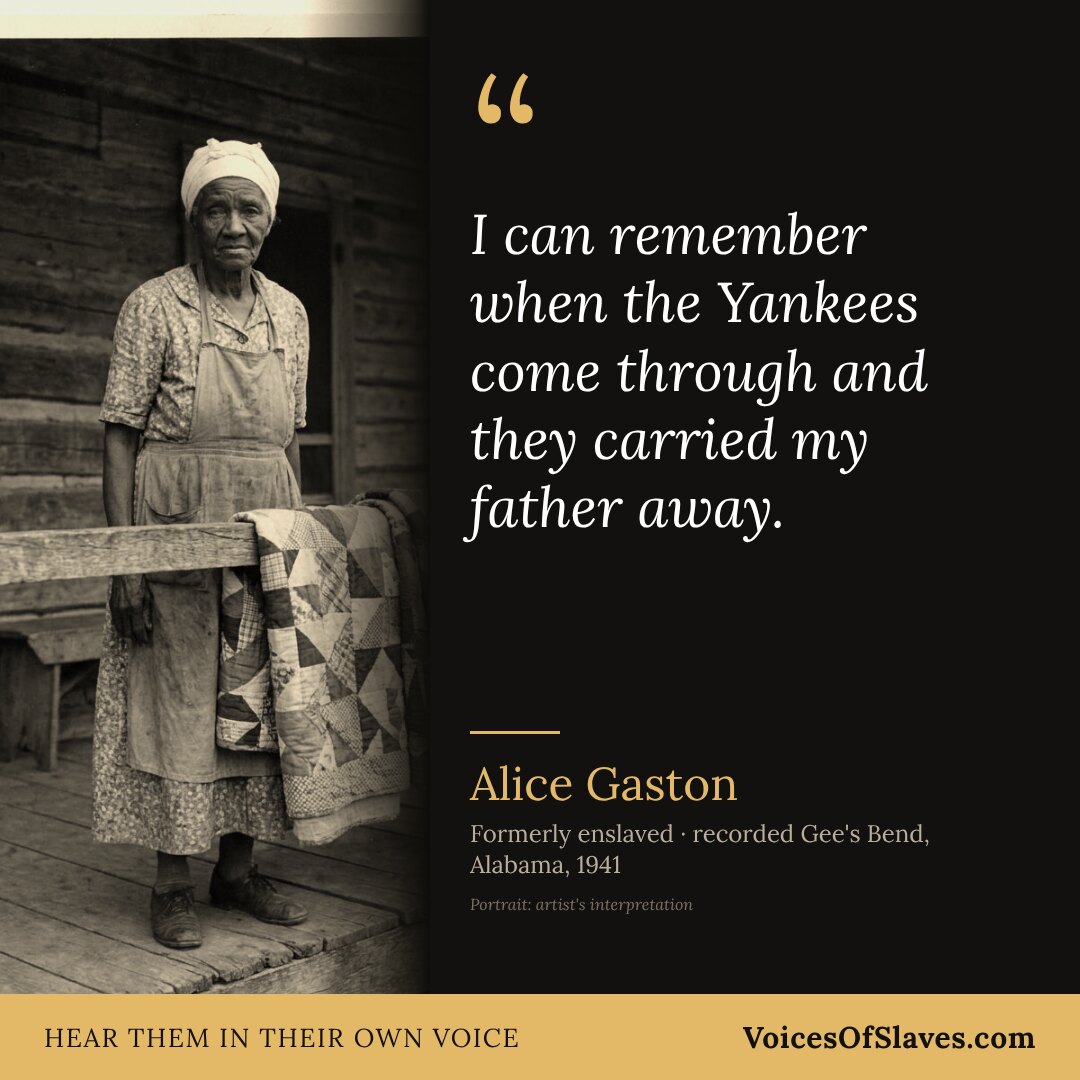
Share their words
Post this card so more people hear Alice's voice.
Discuss Alice's story in the Community
Recorded by Robert Sonkin, Gee's Bend, Alabama, 1941. From Voices Remembering Slavery: Freed People Tell Their Stories. Bracketed notes and question marks in the transcripts mark sounds or words that are hard to hear.